How to Choose Your Next Fantasy Series to Read
Finding your next fantasy series doesn’t have to feel overwhelming. With so many subgenres, story types, and lengthy series to choose from, it’s easy to get lost. Here’s a quick guide to simplify your search and help you pick a series that matches your preferences:
- Understand what you enjoy: Think about the themes, character dynamics, and story elements you love (e.g., lone hero journeys, ensemble casts, or morally complex tales).
- Explore subgenres: From high fantasy (sprawling fictional worlds) to cozy fantasy (low-stakes, heartwarming stories), each subgenre offers a unique reading experience.
- Define your ideal experience: Consider pacing, world-building, and the type of magic system (hard, with clear rules, or soft, with mystery).
- Use tools and platforms: AI-driven platforms like Nbr-AI or community-powered spaces like Goodreads can help you find tailored recommendations.
- Check reviews and synopses: Look for detailed reviews and synopses to ensure the book fits your taste in tone, characters, and plot.
If I Had to Begin My Fantasy Journey in 2026, This Is Where I’d Start
sbb-itb-2566684
Identify Your Fantasy Preferences
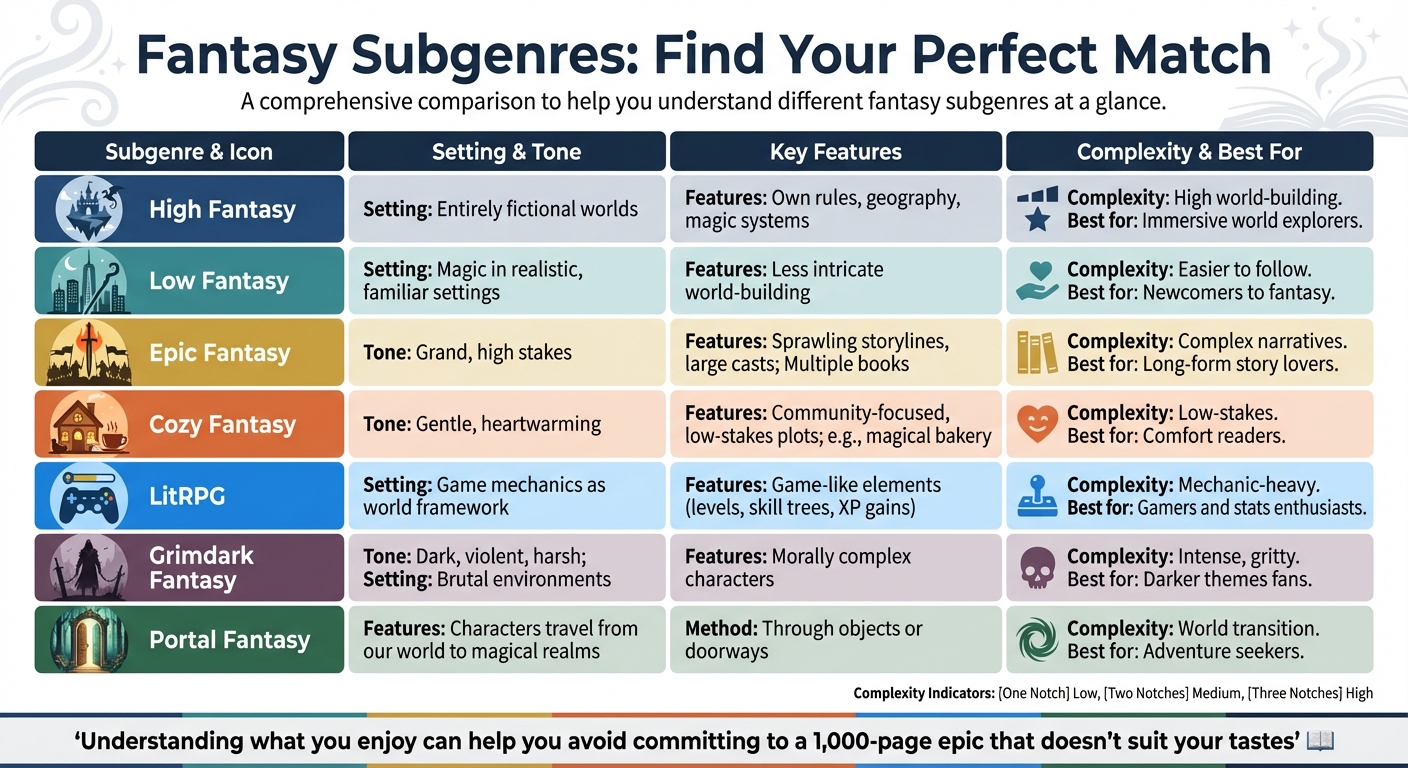
Fantasy Subgenres Comparison Guide: Find Your Perfect Reading Match
Before jumping into recommendations, take a moment to think about what draws you into a story. Fantasy is a vast genre, and understanding what you enjoy can help you avoid committing to a 1,000-page epic that doesn’t suit your tastes.
Explore Popular Fantasy Subgenres
Fantasy comes in many flavors, each offering something unique. High Fantasy takes place in entirely fictional worlds, complete with their own rules, geography, and magic systems. On the other hand, Low Fantasy weaves magic into more realistic, familiar settings.
If you’re new to fantasy, low fantasy can be a great starting point, as it typically involves less intricate world-building and is easier to follow. Epic Fantasy is known for sprawling storylines, large casts, and high stakes, often spread across multiple books. Meanwhile, Cozy Fantasy offers a gentler experience, focusing on community and low-stakes plots - think running a magical bakery or solving small-town mysteries.
For something different, LitRPG introduces game-like elements such as levels, skill trees, and XP gains as part of the world’s framework. Grimdark Fantasy delves into morally complex characters and harsh, violent settings. Lastly, Portal Fantasy involves characters stepping from our world into magical realms, often through objects or doorways.
Consider Key Themes and Story Elements
Think about the themes and character dynamics that resonate with you. Do you enjoy a lone hero's journey, or do you prefer following a diverse ensemble cast? Are you drawn to clear-cut battles of good versus evil, or do morally ambiguous stories intrigue you more?
Pinpoint the elements that keep you hooked. Are you fascinated by secret societies, political intrigue, or eerie atmospheres? Maybe you enjoy narratives that incorporate game mechanics or explore social dynamics. These details often shape your experience more than the subgenre itself.
Define Your Ideal Reading Experience
Your ideal fantasy book isn’t just about the story - it’s also about how it’s told. Consider pacing, world-building, and narrative structure. Do you prefer a single character’s perspective or a sprawling cast? Author John Scalzi highlights the trade-offs of ensemble storytelling:
"If you have a 120K book and one pov character, that's a hundred and twenty thousand words forwarding that character's story. If you split it evenly between two characters, they get 60K apiece. Four characters, and now each of them has only 30K in which to move forward. Pretty soon, it feels like not very much is happening with any one of them."
Another key choice is between "hard" and "soft" world-building. Hard world-building features well-defined rules, while soft world-building prioritizes atmosphere and mystery over specifics. Brandon Sanderson explains:
"The author's ability to solve conflict with magic is directly proportional to how well the reader understands said magic"
If you’re unsure where to start, try sampling shorter works to get a feel for your preferences before diving into lengthy series. Once you’ve identified what you love, you’ll be ready to explore book recommendation platforms tailored to your interests.
Use Book Recommendation Platforms
Once you've nailed down your reading preferences, book recommendation platforms can make finding your next fantasy series a breeze. These tools vary from AI-driven engines to reader-curated databases, each offering unique ways to uncover your next literary adventure.
AI-powered platforms like Nbr-AI use quizzes to craft a personalized reading profile based on your favorite genres, ideal book length, and reading goals. The platform boasts an impressive track record: 85% of users find a favorite within their top three suggestions, and 92% discover new authors through the service. For the best results, answer the quiz questions truthfully and focus on series with match scores above 80%.
Whichbook takes a different approach, letting you search by emotional tones instead of traditional genres. With adjustable sliders, you can tailor recommendations to your mood - maybe you're looking for something "dark and gritty" but not overly disturbing, or perhaps a story that's both "unpredictable" and "beautiful." The platform prides itself on being "rated by readers, not robots", offering a more human touch to its suggestions.
Publisher websites like Orbit Books can also be great resources. They provide niche recommendations, such as series featuring "animal companions" or "cities in speculative fiction." They even cater to fans of popular adaptations like The Witcher or Dune, offering guides to screen-to-page transitions. If you're a binge reader, take advantage of their filters to find completed series, so you won't have to wait years for the next installment.
For those who prefer algorithm-driven tools, What Should I Read Next? analyzes reader data to suggest titles with similar themes to books you've loved. This is especially handy when you're looking for something that mirrors the magic of a recently finished series without spending hours researching.
Once you've explored these platforms, check out curated collections to further refine your search for the perfect fantasy escape.
Explore Curated Collections
If you're into LitRPG or progression fantasy, curated collections can save you a ton of time compared to browsing endless generic fantasy lists. These collections focus on your favorite niches, like cultivation systems or RPG-style leveling, and offer specific titles to check out. Instead of sifting through unrelated options, you get a shortcut to books that match exactly what you're looking for.
One standout platform is Sababa Books, which specializes in these subgenres. They feature titles like The Gilded Rebellion by Rebecca Vale and The Lifeline Protocol by Sera Kane. These are stories where characters gain power through structured systems - a hallmark of progression fantasy. As noted by WhatShouldIReadNext.ai:
"Progression fantasy has become one of the most binge-worthy subgenres in modern speculative fiction"
Another advantage of curated collections is the metadata they include. You'll see labels like "new" (just one book out), "waiting for a sequel", or "completed." This way, you can decide if you want to jump into a finished series or follow along as new installments come out. It’s a great way to avoid the frustration of cliffhangers.
These collections also help you navigate the blurred lines between LitRPG and related subgenres. While LitRPG focuses on game mechanics, progression fantasy often incorporates martial arts, magical towers, or reincarnation themes - but always with a focus on earned growth. If you’re unsure where to start, look for gateway recommendations or subscribe to newsletters like Swords and Spaceships for regular, curated suggestions delivered straight to your inbox.
For readers who want a more structured approach, some services offer 90-Day Reading Road Maps. For $39, you get a PDF with 12–15 curated picks, complete with pacing guidance, delivered within 72 hours. It’s a helpful way to manage the sprawling nature of epic fantasy while keeping your reading journey streamlined and enjoyable.
Use Community-Powered Platforms
Platforms like Goodreads and Reddit fantasy forums offer a treasure trove of reader opinions and tailored recommendations. These spaces thrive on user contributions, from niche book lists to in-depth discussions about what makes a series stand out. Let’s take a closer look at how tools like Goodreads Listopia can simplify your search.
Goodreads Listopia is a game-changer for narrowing down your choices. Instead of wading through generic "best fantasy" lists, you can dive into highly specific collections that cater to unique interests. For instance, the "Best Epic Fantasy (fiction)" list alone boasts over 4,212 books, curated by input from 25,806 voters. These rankings reflect real reader sentiment, making it easier to pinpoint titles that resonate with the community.
What sets these platforms apart is their ability to showcase community-driven insights that go beyond algorithmic suggestions. Features like community tags and shelves let you explore trending favorites. For example, popular series such as A Court of Thorns and Roses have been tagged as "fantasy-recs" by users more than 60 times. Many lists also follow clear guidelines - like including only the first book of a series - to keep recommendations straightforward and accessible.
Don’t overlook comment sections on Goodreads blog posts or Reddit threads. These are goldmines for discovering "hidden gems" that often fly under the radar of mainstream bestseller lists. You can even browse voter profiles to find readers with similar tastes and follow their activity for personalized suggestions. By tapping into these community features, you’ll uncover lesser-known titles and quickly gauge the appeal of different series.
Evaluate Books Through Reviews and Synopses
After narrowing down your options using community platforms, the next step is to dig into reviews and synopses. Star ratings alone won't give you the full story - a five-star review from someone who loves slow-burn political drama means something entirely different than one from a reader who enjoys fast-paced action.
Analyze Reader Reviews
Focus on reviews that dive into details about the world-building, character development, and magic systems. For instance, if you’re drawn to morally complex characters, look for reviews that highlight a grimdark tone or, alternatively, traditional hero arcs. Reviews that include "For fans of" comparisons can also be helpful, as they anchor new series against familiar works. Additionally, comments about pacing and prose can clue you in on whether the writing style is lyrical, straightforward, or overly dense.
Corrie from Realm of Reads offers this advice:
"When you start a new fantasy book, accept that there will be terms, places, and people you may not understand right away, and take comfort that explanations will come the longer you read".
If you notice multiple negative reviews mentioning inconsistent plots or poorly developed systems, it might be worth reconsidering the series. To get a balanced perspective, read both high-rated (4–5 stars) and low-rated (1–2 stars) reviews. This approach helps you weigh the series' strengths and weaknesses.
These reviews can confirm whether the story and its elements align with your preferences, but synopses provide a quick snapshot of what each series offers.
Assess Synopses for Key Features
Once you’ve gathered insights from reviews, turn to the synopses for a concise overview. These descriptions often highlight whether a series matches your interests. Start by noting the world-building details - does the synopsis describe a "secondary world" (High Fantasy) or reference Earth in some way (Low Fantasy)? Then, check for hints about character perspectives: High Fantasy often follows a lone protagonist, while Epic Fantasy typically involves a larger cast with multiple viewpoints.
Pay attention to keywords that signal character growth, such as "military academy", "tutored", or "learning magic". Synopses also reveal the type of magic system in play - specific terms like "bone-shard magic" or "jade-enhanced powers" can indicate whether the author uses a detailed "hard" magic system or a more mysterious "soft" one. Look for tone descriptors like "grim", "brutal", "lyrical", or "atmospheric" to gauge the emotional tone of the series. Lastly, if you prefer completed story arcs, check whether the synopsis or other information clarifies if the series is finished or part of a complete trilogy.
Here’s a quick reference table to help you compare key elements:
| Synopsis Element | What to Look For | What It Tells You |
|---|---|---|
| Setting | "Secondary world", "Parallel London", "Feudal Japan" | Indicates the type of fantasy |
| Protagonist | "Orphan", "Naive", "Warrior-priest", "Outcast" | Hero’s Journey vs. morally complex themes |
| Plot Driver | "War", "Revolution", "Deadly contest", "Retelling" | Political intrigue vs. action-driven stories |
| Magic System | "Bone-shard", "Shamanism", "Alchemy", "Earthsong" | Hard vs. soft magic preferences |
| Tone | "Grimdark", "Lyrical", "Gritty", "Atmospheric" | Emotional tone and reading experience |
Compare Series Features for a Final Decision
Now that you’ve delved into reviews and synopses, it’s time to put your top choices side by side. Using the criteria you’ve already established, compare your favorites to see which one aligns best with your preferences.
Create a Comparison Table
A simple table can help you quickly spot the differences that matter most. Focus on key factors like subgenre, type of magic system, character development, series length, and whether the series is complete. For example, you might weigh a series with an intricate magic system against one that leans more on atmosphere and world-building.
Don’t overlook the time commitment. High fantasy series often require anywhere from 60 to 200 hours to complete. A sprawling epic like Malazan Book of the Fallen (10 volumes) will demand significantly more time than a tightly woven trilogy like The First Law.
Balance Popularity vs. Personal Taste
Just because a series is a bestseller doesn’t mean it’s the right fit for you. Popularity often reflects broad appeal, but it may not match your preferred style or pacing. Awards can point to quality - such as The Broken Earth trilogy, which won three consecutive Hugo Awards - but they don’t guarantee you’ll enjoy it. For instance, if you prefer classic "good vs. evil" tales, a grimdark series like The First Law might feel too bleak.
"In high fantasy, the 'human heart in conflict with itself' is the only thing truly worth writing about."
Your reading goals also matter. If you want a story with a definitive ending, you might steer clear of unfinished works like A Song of Ice and Fire. However, ongoing series can offer the excitement of participating in active fan discussions.
A great way to narrow your options is by using series you’ve already loved as reference points. If Harry Potter drew you in, consider exploring other hidden-world fantasies. If Mistborn fascinated you with its hard magic system, look for series with similarly detailed rules. This approach can help you discover lesser-known gems that truly resonate with your tastes, rather than chasing trends that might not suit you.
Conclusion
Figuring out what you enjoy - whether that's the gritty depth of grimdark, the comforting charm of low-stakes adventures, or the romantic pull of romantasy - can help turn an overwhelming number of options into a manageable list of series you'll genuinely love.
Curated collections are a great way to simplify the search. Platforms like Sababa Books offer handpicked selections featuring progression fantasy mechanics, LitRPG escapades, and captivating portal fantasy worlds. They also use tools like "For Fans Of" comparisons and thematic tags to help you zero in on books that match your mood and reading goals.
That said, trusting your own preferences is just as important. Popularity doesn't always mean a book is the right fit for you. For example, while the highly acclaimed Broken Earth trilogy made history by winning the Hugo Award for Best Novel three years in a row, it might not resonate with everyone. Similarly, a bestseller's widespread appeal doesn’t guarantee it’ll align with your personal taste.
Take time to compare features, trust your instincts, and don’t shy away from exploring lesser-known gems. Whether you’re looking for sprawling sagas or tightly knit trilogies, the perfect series is out there waiting for you. Let these tips be your guide as you dive into your next unforgettable fantasy adventure.
FAQs
How can I figure out which fantasy subgenre I’ll enjoy the most?
To figure out which fantasy subgenre suits you best, start by diving into the vast array of options the genre offers. Fantasy encompasses everything from high fantasy, with its epic quests and richly detailed worlds, to urban fantasy, where supernatural elements collide with modern-day cityscapes. Consider what settings, themes, or tones spark your interest - whether it’s sprawling magical realms, gritty and intense adventures, or deeply character-focused narratives.
Think back to the books, movies, or shows you’ve loved before. Were you drawn to elaborate magic systems, heart-pounding action, or characters who live in shades of gray? These preferences can point you toward subgenres like dark fantasy, portal fantasy, or even the grimmer, edgier world of grimdark. Exploring popular series or checking out curated recommendations from reliable sources can also help you find what clicks. Experimenting with different styles over time will sharpen your sense of what truly excites you in the world of fantasy.
What are the best ways to find fantasy books tailored to my interests?
If you're on the hunt for fantasy books that perfectly align with your preferences, there are plenty of tools and strategies to make the search easier. For example, platforms like Whichbook allow you to filter books based on mood, themes, or even specific character traits, helping you discover stories that feel like they were made for you. It’s a great way to dive into narratives that truly resonate.
You can also turn to AI-driven recommendation systems. These tools analyze your reading habits and offer personalized suggestions, often going beyond just genre to highlight lesser-known titles and authors you might have overlooked. With these resources, finding your next captivating fantasy series becomes not just easy, but an exciting and customized journey.
How do I know if a fantasy series' magic system matches my preferences?
When deciding if a fantasy series' magic system aligns with your preferences, think about how you like magic to work. Do you enjoy structured systems with clear rules, where magic has defined boundaries and logical principles? Or are you drawn to looser, more unpredictable magic, where the emphasis is on mystery and awe?
It's also worth considering the tone and depth of the magic. Checking out synopses, reviews, or short excerpts can give you a sense of how magic is portrayed in the story. This can help you figure out if you lean toward detailed, rule-driven systems or something more mystical and open-ended. Picking a magic system that matches your taste can make the story far more engaging and enjoyable.