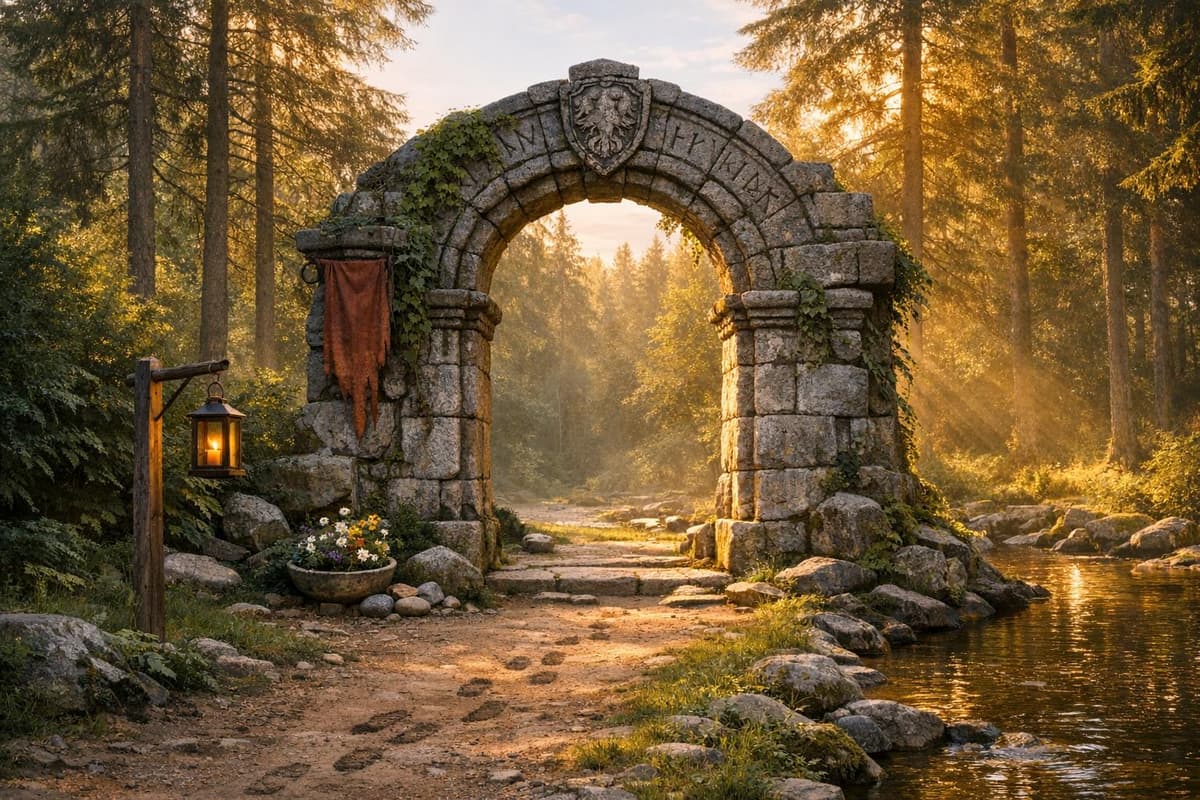
Ultimate Guide to Environmental Storytelling in Fantasy
Want to create fantasy settings that feel alive and immersive? Environmental storytelling is the key. Instead of relying on heavy exposition, let your world reveal its history and emotions through its details - abandoned ruins, weathered monuments, and even the layout of a city can silently narrate your story. This guide breaks down actionable techniques to help you craft settings that engage readers and deepen your narrative.
Key Takeaways:
- Show, don’t tell: Use physical details like worn thresholds or moss-covered statues to hint at history and culture.
- Add depth with history: Subtle markers like carvings or ruins can suggest past events or societal shifts.
- Engage the senses: Go beyond visuals - incorporate sounds, smells, and textures to make your world feel tangible.
- Balance subtlety and clarity: Include meaningful details without overwhelming readers. Use curiosity-sparking elements like a single fresh flower on an altar to draw attention.
- Tie settings to the story: Each location should serve a purpose, whether it’s advancing the plot, establishing tone, or revealing character.
When done right, environmental storytelling transforms your fantasy world into a place readers want to explore. Let’s dive into how to bring your settings to life.
WORLDBUILDING: How to Immerse Your Audience and Make a Believable World
Core Principles of Environmental Storytelling
Environmental storytelling is all about weaving narrative meaning into your world without relying on direct exposition. It operates on three core principles that ensure every detail in your setting contributes to the story in a meaningful way.
Show, Don't Tell Through the Setting
The setting itself should naturally reveal story elements through its physical details. For example, the wear and tear on objects - like moss growing on stone, soot-streaked ceilings, or thresholds smoothed by countless footsteps - can hint at past activities or behaviors without a single word of dialogue. A threshold worn smooth on one side suggests heavy use over centuries, while an untouched side might hint at a forgotten door or even a cultural taboo.
Architecture, too, acts as a silent storyteller. The layout of a city can expose social dynamics: grand mansions towering above cramped, shadowed tenements immediately communicate power disparities. Spaces themselves evoke emotion - narrow hallways can create tension and unease, while expansive, vaulted rooms suggest authority or a bygone era of greatness. Even weather and lighting contribute to the narrative, with warm, inviting light evoking safety and cold, flickering light hinting at decay or danger.
Grounding fantastical elements in ordinary, believable systems is crucial. As the worldbuilding resource DigitalPhrases puts it:
Your readers will believe in dragons if they believe in the plumbing.
Placing extraordinary elements like dragons within a world that also deals with mundane issues - like trade disputes or infrastructure challenges - makes the setting feel authentic and lived-in. When magic interacts with everyday life, such as wizards grappling with practical problems, the fantastical becomes relatable and believable.
These visual and atmospheric cues are just the beginning. The history and culture of your world must also leave their mark.
Creating Context with History and Culture
History should be etched into the fabric of your world. Small, subtle markers - like ancient shrines, carved glyphs, or intricate stitching patterns - can hint at deep cultural traditions or legacies. These recurring details can quietly signal the influence of specific factions or belief systems without the need for direct explanation.
Environmental irony is another powerful tool. Imagine the ruins of a once-lavish palace now overshadowed by a bustling slum - this contrast tells a silent story of fallen empires and shifting social orders. Similarly, a repurposed monument, such as a king's statue now functioning as a public fountain, reflects how societies reinterpret their own histories. Even something as simple as roads rerouted around old battlefields can hint at lingering fears or unresolved trauma.
Everyday rituals can also reveal a society's values more effectively than grandiose lore. Weddings, mourning traditions, or children's games offer a window into what people hold dear. These intimate, relatable details anchor readers in the emotional reality of your world.
By layering these historical and cultural elements into the environment, you prepare readers for the emotional depth of the story.
Balancing Subtlety and Clarity
One of the trickiest parts of environmental storytelling is making details meaningful without being overly cryptic. A "less is more" approach often works best - include only those details that enhance the plot or deepen immersion. Many aspiring fantasy authors dive into their stories before fully understanding their worlds, leading to unfinished narratives. Nearly 40% of these authors encounter this issue. Ensuring every environmental detail serves a clear purpose can help avoid this common trap.
To guide readers without over-explaining, use curiosity beacons - small, intriguing details that naturally draw attention. For instance, a single fresh flower on an otherwise abandoned altar can spark questions. Similarly, asymmetry in architecture, like a broken column or an uneven staircase, hints at life’s interventions and lends authenticity to the space. Each location should evoke a specific emotional tone, whether it’s wonder, dread, or nostalgia, to keep the storytelling consistent.
Introduce new environmental elements strategically - one per scene - tied directly to the character's current objective. For example, if your protagonist is searching for a hidden passage, that’s the moment to reveal a suspicious gap in the stonework or a faint draft from behind a tapestry. Every detail should move the plot forward, ensuring that nothing feels extraneous.
Techniques for Crafting Immersive Environments
Bringing a setting to life means creating spaces that resonate emotionally and serve the story's needs. Every location should have a purpose and engage the senses to fully immerse readers.
Designing Locations with Narrative Purpose
Every setting needs to contribute to the story. Start by identifying an "emotional thesis" for each space - a core feeling like dread, nostalgia, or awe. For example, a throne room might radiate authority with its towering ceilings and cold stone, while a rebel hideout might feel intimate and secretive with its cramped corridors and flickering firelight. This focus ensures that every design choice supports the story's tone and purpose.
Before diving into a scene, outline a "place intent" for major locations. Define its theme, what characters will do there, potential threats, rewards, and the tone it conveys. This approach transforms a dungeon from just a collection of dark hallways into a gripping environment where characters navigate tight spaces, confront dangers like flooding, uncover forgotten relics, and feel the creeping claustrophobia of the setting.
Consider the history of each location - its origins, how it evolved, and its current use. Even the architecture can hint at past events, like economic shifts or political upheaval. Adding vertical layers to your design - such as rooftops for power and surveillance, streets for daily life, and basements for hidden secrets - can create a sense of depth and hierarchy.
Details like mismatched stones in a repaired wall, widened doorways for oversized carts, or worn stairs convey a lived-in feel. Perfect symmetry and pristine designs, on the other hand, might work best for ceremonial or authoritarian spaces where control is a central theme.
Using Sensory Details to Evoke Emotion
To fully immerse readers, engage all their senses. As John R. Fultz explains:
You can describe all the diamond-bright towers and blood-dark seas you want, but if your reader cannot smell, taste, touch, and feel your world, no amount of beautiful prose will save you from an underdeveloped setting.
Think beyond visuals. An ancient city might carry the musty scent of age, echo with creaking carts, and feature textures that tell its story - like crumbling stone or slick moss. In a palace, the air might hold the delicate aroma of jasmine mixed with smoky torch fumes, while the smooth, cool marble beneath the characters' feet reinforces the grandeur.
Let your characters' perspectives shape the sensory details. Instead of stating, "it was hot", show a character shielding their eyes from harsh sunlight, wiping sweat from their brow, or savoring the coolness of a shaded alley. These small touches make the environment feel personal and immediate.
Interaction is crucial. As C.J. Wilson puts it:
Good worldbuilding comes from interaction-based worldbuilding that connects your characters to the world either emotionally or physically.
Incorporate sensory details into actions - like biting into an unfamiliar fruit, brushing against rough bark, or pausing to absorb the ambient noise of a bustling market. These moments make the world feel active and alive.
Even material culture - textures, sounds, and rhythms - can reveal deeper layers. The contrast between smooth silks and rough burlap might hint at economic divides, while hard, clipped sounds in dialogue can heighten tension. These sensory tools help create a world that feels rich and textured.
Environmental Storytelling in Action: Key Examples
Sababa Books provides excellent examples of environmental storytelling. In The Gilded Rebellion by Rebecca Vale, the stark contrast between the lavish noble districts and the shadowy, cramped lower quarters instantly conveys the city's power imbalance. Opulent estates with soaring windows stand in sharp contrast to tenements where sunlight barely reaches, visually reinforcing the rebellion's central conflict.
In The Lifeline Protocol, sensory details are seamlessly tied into progression mechanics. Characters experience the world through changes like a metallic taste or the sensation of added weight, making gameplay elements feel like natural extensions of the setting.
These examples highlight the importance of showing rather than explaining. Instead of lengthy exposition about a magical system, let readers see a character cut their palm to ignite a fire, allowing them to infer the system's rules and costs. Small, intriguing details - like a vibrant flower growing on a forgotten altar or a hermit crab using a discarded mechanical part as its shell - can spark curiosity about the world's deeper history.
Striking a balance between the familiar and the fantastical is key. Ground your world in relatable elements - farming, trade disputes, daily routines - before layering in the extraordinary. When readers believe in the mundane details, they’ll be ready to believe in the dragons. These examples show how thoughtful environmental design can elevate a fantasy world.
sbb-itb-2566684
Integrating Environmental Storytelling into World-Building
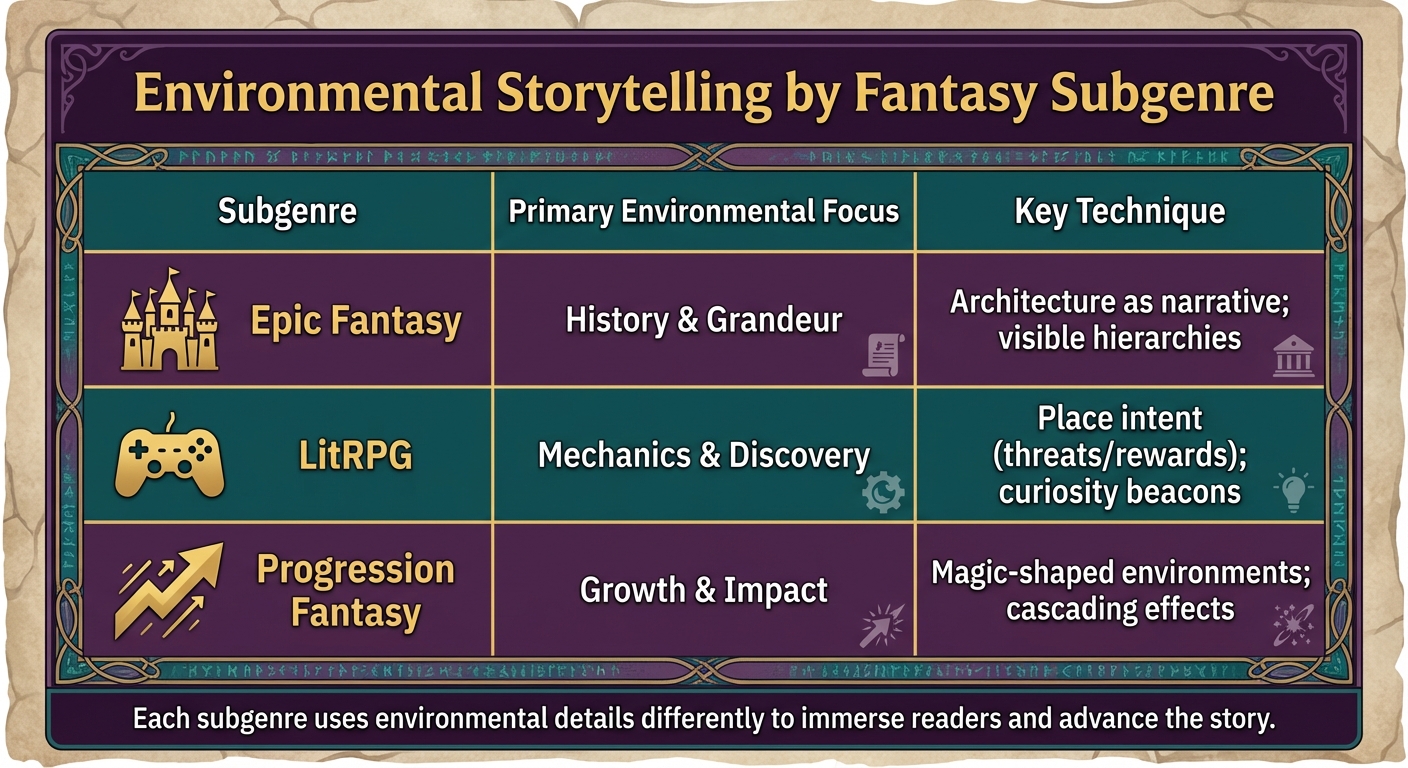
Environmental Storytelling Techniques by Fantasy Subgenre
Layering Environmental Details into World-Building
World-building isn’t a straight path - it’s more like weaving a tapestry. The "Bob and Weave" Method encourages moving between plot, character, and setting as your story evolves. This approach lets you tweak earlier details to serve the story, instead of forcing your narrative into rigid world-building rules. This keeps your environments dynamic and tied to the story, rather than feeling like static backdrops.
Think of your world-building like an iceberg. Only reveal the tip - the details that matter in the moment - while hinting at the vast history and depth beneath. For instance, a character walking through a bustling city doesn’t need a history lesson. Instead, small details like worn steps at an ancient temple or a road curving around old ruins can subtly suggest centuries of change without overloading readers with exposition.
Scarcity shapes culture. What’s missing in your world - whether it’s water, literacy, or magical energy - can influence everything from architecture to social customs. Imagine a water-scarce society: rooftops might be designed to collect rain, and greetings could involve showing empty hands, symbolizing trust over limited resources.
Consistency is key, and logic chains help maintain it. If steel rusts quickly in your world, society might turn to ceramic blades, creating unique wound patterns and influencing medical practices. Each rule should ripple outward, creating a believable and interconnected world.
Beyond physical details, consider how these choices reflect societal values and historical events.
Reflecting Societal Values and Conflicts
A world’s environment should reflect its people. Infrastructure reveals power dynamics - wealthier areas might boast wide stone streets and fountains, while poorer neighborhoods are marked by narrow alleys and shared wells. Architecture can also hint at cultural priorities: east-facing buildings might symbolize optimism, while heavily fortified structures suggest a society shaped by caution or conflict.
History leaves marks. Repurposed monuments, bullet holes in walls, or roads detouring around old battlefields can reveal past conflicts and their lingering effects. Instead of explaining a war outright, show its aftermath - like a ruined citadel turned marketplace - to let readers piece together the story themselves.
Take a local perspective to immerse readers. What do ordinary people fear at night? What jokes do they tell about neighboring regions? What myths do they believe, even if they’re not entirely accurate? Focusing on these everyday details allows readers to experience the world through its inhabitants’ eyes.
Environmental Storytelling for Different Fantasy Subgenres
Once you’ve layered in environmental details and societal reflections, think about how different fantasy subgenres use these elements uniquely. Epic fantasy leans into architecture and landscapes to convey grandeur and history. Imagine towering citadels, fallen kingdoms, and sweeping vistas that show, rather than tell, the weight of the past. Even small cues, like locked doors for commoners or the way spaces are navigated, can hint at social hierarchies.
In LitRPG and progression fantasy, environments often feel like game zones. Define each area’s "Place Intent" - what theme it conveys, what actions characters take there, possible threats and rewards, and the emotional tone. Use "curiosity beacons" - like a cold hearth with two cups or a broken sword in the snow - to spark exploration and invite readers to imagine the story behind these details.
For progression fantasy, magic should actively shape the environment. Think of trophic cascades: when wolves were reintroduced to Yellowstone in 1995, their presence changed prey behavior, which in turn affected vegetation and even river paths. Apply this to magic - if dragons exist, their presence might create firebreak zones, alter migration patterns, or push civilizations underground.
Here’s a quick breakdown of how different fantasy subgenres approach environmental storytelling:
| Subgenre | Primary Environmental Focus | Key Technique |
|---|---|---|
| Epic Fantasy | History & Grandeur | Architecture as narrative; visible hierarchies |
| LitRPG | Mechanics & Discovery | Place intent (threats/rewards); curiosity beacons |
| Progression Fantasy | Growth & Impact | Magic-shaped environments; cascading effects |
A great example of these principles in action is Sababa Books. In their progression fantasy titles, magic systems are seamlessly tied to the environment. Characters witness magical energy influencing the terrain, weather, and even ecosystems. This integration makes the fantastical elements feel grounded and immersive.
The secret across all subgenres is mundane realism. Believability comes from everyday struggles - trade disputes, poor harvests, or the challenge of moving goods through a crowded city. By anchoring your world in relatable details, you make even the most fantastical elements feel real and engaging.
Common Mistakes and How to Avoid Them
Overloading the Reader with Details
Sometimes, writers with vivid imaginations get carried away, packing their descriptions with too much detail. Instead of helping readers visualize the scene, this overload can have the opposite effect - leaving them overwhelmed and unable to form their own mental images. Author K.M. Weiland explains it best:
"The most powerful descriptions are those that give readers the tools to build their own settings, rather than imposing the author's vision."
To avoid this, try the Iceberg Method: keep most of your world-building in your notes and share only the essentials with your audience. This approach creates a curiosity gap, sparking interest without bogging down the narrative. Start by painting the big picture before diving into specific details, helping readers orient themselves within the scene. Only include details that drive the current action forward.
But it’s not just about avoiding excessive details - neglecting the purpose of your narrative can also slow things down.
Forgetting the Narrative Purpose
While excessive detail can stifle imagination, static descriptions that lack purpose are equally problematic. This issue, often called the "Tableau" trap, occurs when writers describe a scene without involving their characters, which can halt the story's momentum. For example, you might describe ornate spires or abandoned streets, but if your characters aren't interacting with these settings, they risk feeling lifeless - like mere wallpaper.
Descriptions should always serve a purpose. They need to advance the plot, establish tone, or reveal something about a character. Janice Hardy, founder of Fiction University, offers this practical advice:
"If a detail doesn't also: Advance the plot, Establish tone, or Reveal something about character… it probably isn't needed."
To make your descriptions work harder, aim for double duty. Filter the setting through your character's perspective - a soldier might notice the strength of city walls, while a merchant focuses on bustling market stalls. Let your characters interact with their surroundings, whether physically or emotionally, to make the setting feel dynamic and alive. Avoid the "Scenic Route" sin, where characters wander aimlessly through your world just to show off your world-building. This often leads to shallow descriptions that don’t serve the story.
Relying Too Heavily on Clichés
Believable worlds come from thoughtful construction, and steering clear of clichés is key to keeping your story fresh. A common pitfall is the "Oppressed Privilege" problem, where a group is marginalized for a trait - like magic or superpowers - that logically should give them significant advantages. Similarly, some writers create worlds without realistic systems of governance or enforcement, or populate them with characters who are flat stereotypes of their culture or kingdom.
To sidestep these traps, establish consistent rules for how your world operates - its economy, climate, and belief systems - so it feels natural and lived-in. Show variation within cultures; not everyone from the same region should think or act the same way. If your story includes large-scale crises, make them central to the plot. Using such crises as mere background details without addressing them leaves readers feeling unsatisfied. Also, avoid dialogue where characters explain world-building facts they already know just for the reader’s benefit. This breaks immersion. Instead, introduce a newcomer character or reveal information through conflict and discovery, which feels more organic.
Conclusion: Bringing Your Fantasy World to Life
Environmental storytelling takes fantasy from good to unforgettable. Think of your landscape as a character, ground your magic in relatable elements, and weave history into every corner of your world. As Geoff Matthews aptly says:
The landscape is as much a character as the hero. It cannot be neglected and should not be neglected.
The key is to reveal just enough. Focus on emotional touchpoints - a tattered journal, a mended wall, or a road built for migrating giants. Often, a single, well-chosen detail can say more than pages of description. Show your world through actions and observations rather than lengthy explanations.
Start with the small, everyday aspects of your world. Design like a local, not an all-knowing creator. Highlight what your characters notice, fear, or cherish in their surroundings. Use sensory details to make the extraordinary feel real - because if readers can believe in the plumbing, they'll believe in the dragons. Create logical "if X, then Y" rules to keep your world consistent, and include subtle clues that invite readers to explore without overwhelming them with information.
The magic of environmental storytelling lies in giving readers the thrill of discovery. When they stumble upon a cold hearth or notice how a building's design reflects power struggles, they become part of the story. That sense of connection is what turns a fantasy novel into something unforgettable.
By embracing these techniques, your readers won’t just follow your story - they’ll live in it. Your world is waiting - bring it to life.
For more inspiration on crafting immersive fantasy worlds, check out the LitRPG and fantasy adventures available on Sababa Books (https://sababa-books.com).
FAQs
How do I hint at backstory without info-dumping?
To keep your story engaging, let the backstory unfold naturally through actions, dialogue, or consequences tied to the scene. For instance, instead of explaining how magic works, show it in action through a character’s decisions or struggles. Similarly, reveal bits of history through a character’s memories or casual conversations. By weaving these details into moments where they truly matter, you create a sense of discovery while maintaining the story’s flow and pacing. This approach avoids overwhelming readers with too much information all at once, keeping them immersed in the narrative.
How many setting details should I include per scene?
Including 1 to 3 well-chosen setting details per scene often works best. Overloading a scene with too many details can overwhelm readers and make it feel cluttered. Instead, zero in on the most impactful elements - those that enrich the atmosphere or help move the story forward.
How can I make magic logically change the environment?
To make environmental changes caused by magic feel natural and believable, it’s crucial to define how your magic system interacts with the world’s ecosystems. Think about how magical forces might influence things like plant growth, animal behavior, or even weather patterns. For example, does magic accelerate evolution, creating entirely new species? Or does it warp existing flora and fauna into something unrecognizable?
Establish clear rules and boundaries for these interactions. For instance, if magic reshapes landscapes, does it require a specific resource or energy source? Are there limits to how far-reaching these changes can be? Maybe certain biomes are more susceptible to magical influence than others - like deserts that bloom into lush forests or oceans that churn with unnatural storms.
By creating a framework that ties these effects to your world’s ecology and lore, you ensure that the changes not only make sense but also enrich the depth of your story. Consistency is key - if magic can transform an ecosystem in one instance, it should follow the same principles in another. This approach makes the integration of magic with natural processes feel seamless and grounded in your world’s unique logic.