
5 Tips for Pacing LitRPG Quests
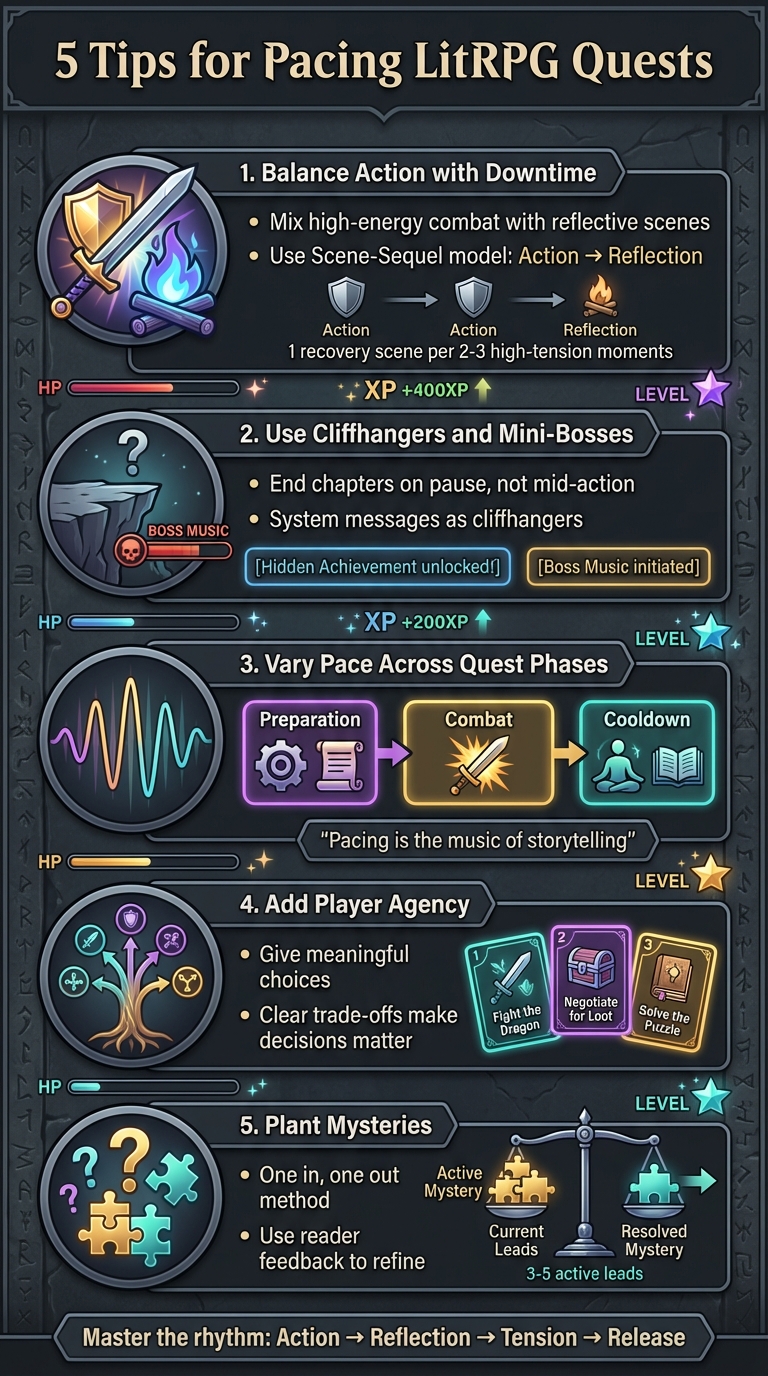
Pacing is crucial in LitRPG and GameLit storytelling. It keeps readers engaged by balancing action, downtime, and game mechanics. Poor pacing can make even the most exciting quests feel tedious. Here are five practical tips:
- Alternate Action and Downtime: Mix high-energy scenes with reflective moments to maintain rhythm and character depth.
- Cliffhangers and Mini-Bosses: Use suspenseful chapter endings and intermediate challenges to keep tension high.
- Vary Quest Phases: Shift between planning, combat, and cooldown periods for a dynamic flow.
- Offer Choices: Let characters make meaningful decisions to create an interactive feel.
- Plant Mysteries: Leave unresolved questions to maintain curiosity and use reader feedback to refine pacing.
5 Essential Tips for Pacing LitRPG Quests
A quick tip to improve PACING
sbb-itb-2566684
1. Balance Action with Downtime
Too much nonstop action can overwhelm readers, making them lose interest. As Mythcreants explains:
"A pace that's too high will exhaust an audience so much they start tuning the story out".
To avoid this, mix high-energy combat or intense moments with quieter, reflective scenes where characters can regroup and recover.
These downtime scenes aren't just about taking a breather - they're an opportunity to advance the story in meaningful ways. Characters can patch up injuries, repair their gear, or process the emotional toll of their challenges. It's also a natural time for your protagonist to handle game-like elements, such as allocating stat points, reviewing loot, or strategizing for the next encounter. These moments can seamlessly weave system mechanics into the narrative.
The trick is to keep these quieter moments engaging. Have your characters multitask - tending wounds while hashing out tactics or resolving interpersonal conflicts. This keeps the story moving, even during downtime. A great way to structure this is by using the Scene-Sequel model: action-packed sequences (Goal, Conflict, Disaster) followed by reflective moments (Reaction, Dilemma, Decision). This creates a rhythm that keeps readers hooked.
A good rule of thumb is to include one recovery scene for every two or three high-tension moments. This doesn’t mean balancing page counts - a long dungeon crawl might only need a short aftermath scene. Even during downtime, maintain a sense of underlying tension. For example, the characters might rest in a seemingly safe spot while staying alert for potential threats. This approach allows you to vary the pacing and keep the story dynamic.
Downtime also adds depth to your characters, showing their humanity. Highlighting their need for food, rest, and emotional reflection makes them feel more real. It’s the difference between a video game character who endlessly respawns and a protagonist readers can connect with. As Alfred Hitchcock once said:
"Drama is life with the dull bits cut out".
So, trim the tedious parts, but keep the moments that show your characters as people - those are what make their victories feel earned.
2. Use Cliffhangers and Mini-Bosses for Tension
Cliffhangers and mini-boss encounters are excellent tools for keeping readers hooked. The trick lies in choosing the right moment to pause the action. As Martin Ralya, Administrator at Gnome Stew, explains:
"The key to a good cliffhanger is ending your session on a pause in the action, not right in the thick of it".
For example, end a chapter just as the protagonist approaches the mini-boss’s lair and the ominous "Boss Music" kicks in - not mid-battle while calculating damage from a critical hit.
In LitRPG, system messages can double as cliffhangers, adding layers of intrigue. Imagine concluding a chapter with a cryptic "Hidden Achievement" notification or a sudden system glitch. A stat report showing something impossible or a mysterious update that raises more questions than answers creates suspense. Run a Game advises:
"The best ending to a session is an unforgettable ending... those that leave the PCs with a question".
These system-driven moments set the stage for mini-boss encounters, which act as pacing milestones in your story. They provide natural peaks, testing the protagonist’s newly gained skills or equipment. As Mike Stout, an Activision Designer, points out:
"Like chapter breaks in a book, players reach a goal (minor or major) when they reach a boss battle".
Mini-boss fights ramp up the tension before transitioning into recovery scenes, giving characters - and readers - a chance to reflect on what just happened. These moments should feel impactful but not overshadow the main villain. To achieve this, design mini-bosses as lieutenants or subordinates of the final boss . Equip them with unique abilities that hint at the challenges ahead. Use "1-HP minions" to highlight the mini-boss’s durability and create a sense of escalating difficulty. You can also add objectives beyond just defeating the mini-boss, like stopping a messenger or protecting an NPC, to heighten the stakes.
The real magic happens when you balance these elements. Mini-bosses provide those high-energy spikes in the narrative, while cliffhangers leave readers eager for more. To keep things fresh, vary your approach - mix unresolved actions, puzzling discoveries, and decisive moments to avoid falling into a predictable pattern.
3. Vary Pace Across Quest Phases
Varying the pace within quest phases can make your storytelling feel more dynamic and engaging. Think of each quest as a symphony with highs and lows, where moments of tension and release work together to keep readers hooked. As LitRPG Reads puts it:
"Pacing is the music of storytelling; it sets the tempo, builds suspense, and provides respite, all in harmonious rhythm".
Too much action can overwhelm readers, while too much downtime risks losing their interest. Striking the right balance ensures that the story remains compelling.
Preparation phases are a great way to build emotional investment. These moments, focused on resource management and strategic decisions, help readers connect with the characters. Choices like skill upgrades or selecting dungeon paths can reveal a lot about your protagonist. As Richard Parry notes:
"Use stats like seasoning, not the main course... instead of listing 'Strength +3, Dexterity +2,' show the impact".
These decisions should have meaningful consequences, influencing the challenges ahead and giving readers a sense of progression.
The transition from careful planning to intense combat can be a powerful way to re-engage readers. After chapters of strategy and introspection, a sudden ambush or unexpected fight feels more impactful. Highlight this shift by moving from detailed, thoughtful descriptions during preparation to quick, sharp dialogue and action during combat. Mike Bourke, a game master and author, captures this idea well:
"The valleys serve to punctuate the troughs, making the experience of the next peak all the more intense by virtue of the contrast".
After the chaos of battle, give your characters - and your readers - a chance to breathe. These cooldown moments allow for reflection and emotional processing, making the characters feel more human. They also give readers time to absorb the details and stakes of earlier scenes, ensuring the story's emotional weight isn't lost. Skipping this step risks making your characters feel flat and the narrative less impactful.
4. Add Player Agency and Nonlinear Elements
Balancing action and downtime is just the beginning - adding player agency takes engagement to another level. Real choices make LitRPG quests feel interactive rather than just pre-scripted events. Whether it’s picking which dungeon to explore first or deciding the fate of a defeated enemy, these decisions pull readers deeper into the story. As LitRPG Reads puts it:
"When players feel like their decisions and actions truly matter, they're way more invested".
To make these choices impactful, try blending structure with flexibility. Keep a clear main objective - like defeating a final boss - but let the protagonist decide how to approach it. Should they focus on recruiting allies, gathering intel, or upgrading their gear? Each path should come with its own consequences, making every decision meaningful.
Stay focused by limiting active quest options to 3–5 at a time. Assign clear trade-offs to these quests, such as: “Haunted tower: two days, high danger” versus “Merchant guild: one day, low risk, costly.” Using tools like escalation clocks can further enrich the narrative. These clocks show how ignored quests evolve or expire, ensuring that even unchosen paths remain dynamic and can ripple through the story later.
Additionally, choices within the LitRPG system - such as skill tree investments or class selections - can reveal a character’s personality and values. For example, prioritizing empathy-based skills over brute force doesn’t just shift game stats; it also reflects the protagonist's core principles. By weaving agency and nonlinear elements into the story, you not only make the narrative feel personal but also keep the stakes evolving in unexpected ways.
5. Plant Mysteries and Use Reader Feedback
Leaving certain questions unanswered can keep readers hooked between action-packed moments. Instead of resolving every storyline neatly, drop hints about future events or lingering issues to maintain curiosity. As LitRPG Reads puts it:
"End quests with threads: Don't tie up every loose end. Leave breadcrumbs about future events or unresolved problems to keep players asking, 'What's next?'"
A useful approach is the "one in, one out" method: for every mystery you solve, introduce a fresh hook. This ensures you maintain a balance of 3–5 active leads, keeping readers intrigued without overwhelming them. These mysteries can be tied to game mechanics - think unreliable stat reports, hidden achievements triggered at pivotal moments, or system glitches that hint at deeper story elements. Such mechanical hooks build suspense without relying solely on combat sequences.
Reader feedback plays a crucial role in refining your narrative's pacing and overall structure. For serialized stories, feedback from engaged readers or beta testers is invaluable. They can flag pacing issues, such as moments where the story drags or mechanics feel inconsistent. If readers express confusion about the main plot goal within the first 10–20% of the story, it’s a strong indicator that adjustments are needed. Ask specific questions, like where they started to lose interest or skim sections. These "drag points" often highlight areas burdened by info-dumps or repetitive combat scenes that could be streamlined.
Gaming journalist Kiera Mensah underscores the importance of beta testers:
"Beta testers - especially those well-versed in RPG systems - are your secret weapon. If a scene feels slow, confusing, or mechanically inconsistent, revise until the gears mesh perfectly."
Use this feedback to identify which unresolved questions resonate most with readers. Focus on those while trimming weaker hooks to keep your story sharp and engaging.
Conclusion
Keep your LitRPG story engaging by balancing action-packed moments with quieter, reflective periods. A useful method is the "staircase" approach - alternating between high-intensity scenes and slower, introspective ones. This pattern builds tension gradually and avoids overwhelming readers with nonstop battles or excessive downtime. As Alfred Hitchcock once said:
"Drama is life with the dull bits cut out".
Cut unnecessary filler, but don’t lose the emotional depth that keeps readers invested.
Here’s a quick recap: balance intense sequences with recovery, use cliffhangers to maintain momentum, vary pacing across different quest stages, give players meaningful choices, and weave in mysteries based on reader feedback. These elements work together to shape not just the rhythm but the overall tone of your story.
Tension is about more than immediate conflict - it’s the lingering questions and uncertainties that keep readers hooked. Use quieter moments to introduce new mysteries, ensuring that even downtime carries a sense of intrigue.
For inspiration, check out titles that nail this balance. The collection at Sababa Books is a great place to start. These stories show how to make game mechanics like stats and level-ups feel integral to the narrative, blending progression systems seamlessly with emotional storytelling.
Mastering pacing isn’t just about keeping the story moving - it’s about creating a rhythm that captures readers from start to finish.
FAQs
How can I tell if my quest pacing is too fast or too slow?
When writing, pay attention to signs like unclear progress, boredom, or frustration. If your characters aren't achieving much or the story feels stagnant, the pacing might be dragging. On the flip side, if events feel rushed and lack emotional weight, the pacing could be too quick. A well-paced story strikes a balance between action and quieter moments, allowing readers to process events and form a connection with the narrative.
How can I show stats and loot without slowing the story down?
When weaving stats and loot into your story, make them part of the action rather than isolated details. Instead of dumping information about an item's stats, let its significance unfold through the plot. For example, a seemingly ordinary sword could reveal hidden powers during a pivotal battle, or a rare artifact might spark a rivalry or trigger a quest to uncover its origins.
By tying loot directly to character decisions or events, you keep the momentum alive. Maybe a character discovers a map etched onto a shield, leading to a long-lost treasure. Or perhaps a powerful ring carries a curse that forces the group to seek out a healer. These elements should feel like natural extensions of the story, not interruptions.
Stats can also be subtly integrated. Instead of listing a weapon's damage, show its impact: "The blade cleaved through the iron door as if it were paper." This approach keeps readers engaged while maintaining immersion. The key is to let these details serve the story, enhancing the narrative rather than pulling focus away from it.
How do I keep downtime scenes tense and interesting?
To make downtime scenes more engaging, center them around the characters' emotional responses and how these quieter moments influence the overall story. These scenes are an opportunity to highlight relationships, underlying conflicts, or personal ambitions that add layers to the narrative. Instead of relying on exposition, use downtime to create purposeful interactions or moments of introspection that keep the story moving forward while deepening the emotional connection with the audience.