The Ultimate Guide to LitRPG and GameLit Novels
LitRPG and GameLit novels combine storytelling with game mechanics, creating immersive worlds where characters level up, gain skills, and track stats like in video games. Over the last decade, these genres have grown in popularity, with notable milestones like Matt Dinniman's This Inevitable Ruin reaching #2 on The New York Times Audio Fiction list in 2025.
Here’s what you need to know:
- LitRPG: Focuses on detailed game mechanics, visible stats, and progression systems. Characters are aware of the "game rules" and interact with them.
- GameLit: A broader category that includes game-inspired worlds but doesn’t require explicit stats or systems.
Both genres appeal to readers who enjoy clear, measurable character growth and structured narratives. Whether it’s through quests, loot drops, or skill trees, these stories deliver the satisfaction of "leveling up" without the need to play the game.
Keep reading to learn how LitRPG and progression fantasy differ, why they’re so engaging, and where to start your journey into LitRPG and GameLit.
Core Elements of LitRPG and GameLit Novels
Game Mechanics and Systems
In LitRPG and GameLit novels, game mechanics are not just background details - they’re the backbone of the story. These genres use explicit numerical stats, like Strength or Dexterity, as measurable benchmarks for characters. Beating enemies grants XP, unlocking new abilities and skills along the way.
Quests and missions play a vital role by giving characters clear objectives and rewards, keeping the plot focused. Instead of aimless wandering, protagonists follow structured paths, with each quest offering a sense of purpose. Loot drops - like weapons, armor, or potions - add an extra layer of excitement, rewarding characters for their victories. Readers also get a front-row seat to characters carefully crafting their "loadouts" by selecting gear that maximizes their effectiveness.
What sets these stories apart is the meta-awareness of the characters. They interact with floating status screens, system notifications, and health bars as part of their everyday reality. It’s not just a fantasy world - it’s a fully gamified experience. As the LitRPG Podcast explains:
"If the reader has been given enough information that they could roll their own character in your story's game world, then you've included enough information about the game mechanics".
This detailed approach to mechanics lays the groundwork for structured and engaging progression.
Leveling and Progression Systems
In these genres, character progression is crystal clear. Unlike traditional fantasy, where a hero’s growth is often implied or abstract, LitRPG spells it out. For example, readers might see a character explicitly jump from Level 12 to Level 13, making progress tangible. Author Luke Chmilenko captures this appeal perfectly:
"the inherent appeal of increasing numbers".
Characters make deliberate choices about their development, allocating stat points to areas like Strength for close combat or Intelligence for magic. These decisions directly impact their ability to tackle challenges. Grinding - repeating battles to earn XP - becomes a narrative tool that ensures characters are ready for tougher opponents.
Here’s how progression differs between LitRPG and GameLit:
| Feature | LitRPG Progression | GameLit Progression |
|---|---|---|
| Visibility | Readers see explicit stats, levels, and XP tables. | Progression is described narratively, without detailed numbers. |
| Character Awareness | Characters actively check stats and optimize builds. | Characters may not fully understand the system or treat it as background. |
| Narrative Role | Mechanics are central, with leveling up as a key focus. | Mechanics support the story but don’t dominate it. |
| Complexity | High detail with skill trees and attribute bonuses. | Simpler, with less focus on stats and more on adventure. |
How Game Elements Create Immersion
The combination of structured mechanics and measurable progression makes LitRPG incredibly immersive. Readers don’t just observe the story - they engage with it. They find themselves strategizing along with the characters, debating whether to upgrade a weapon or save resources for a rare spell. This "min-maxing" experience adds an interactive layer that traditional fantasy struggles to replicate .
Quests provide a clear narrative framework, keeping the story dynamic and rewarding. Each completed mission brings a sense of accomplishment, whether it’s through XP gains or unlocking a powerful new skill. It mirrors the dopamine rush gamers feel when leveling up or finding legendary loot, and readers get to share in that thrill.
The stakes are often raised with features like permadeath, where dying in the game means losing everything - sometimes even in the real world. This makes progression feel impactful and keeps tension high. Detailed crafting systems and in-game economies add even more depth, where success in the virtual world can translate to tangible rewards. As Paul Miller from The Verge puts it:
"LitRPG is about what MMOs are actually about: grinding experience and gear. It's a novel about the pleasure of leveling up".
LitRPG vs GameLit: Which Gamer Book Genre is Right for You?
LitRPG vs. GameLit: Understanding the Differences
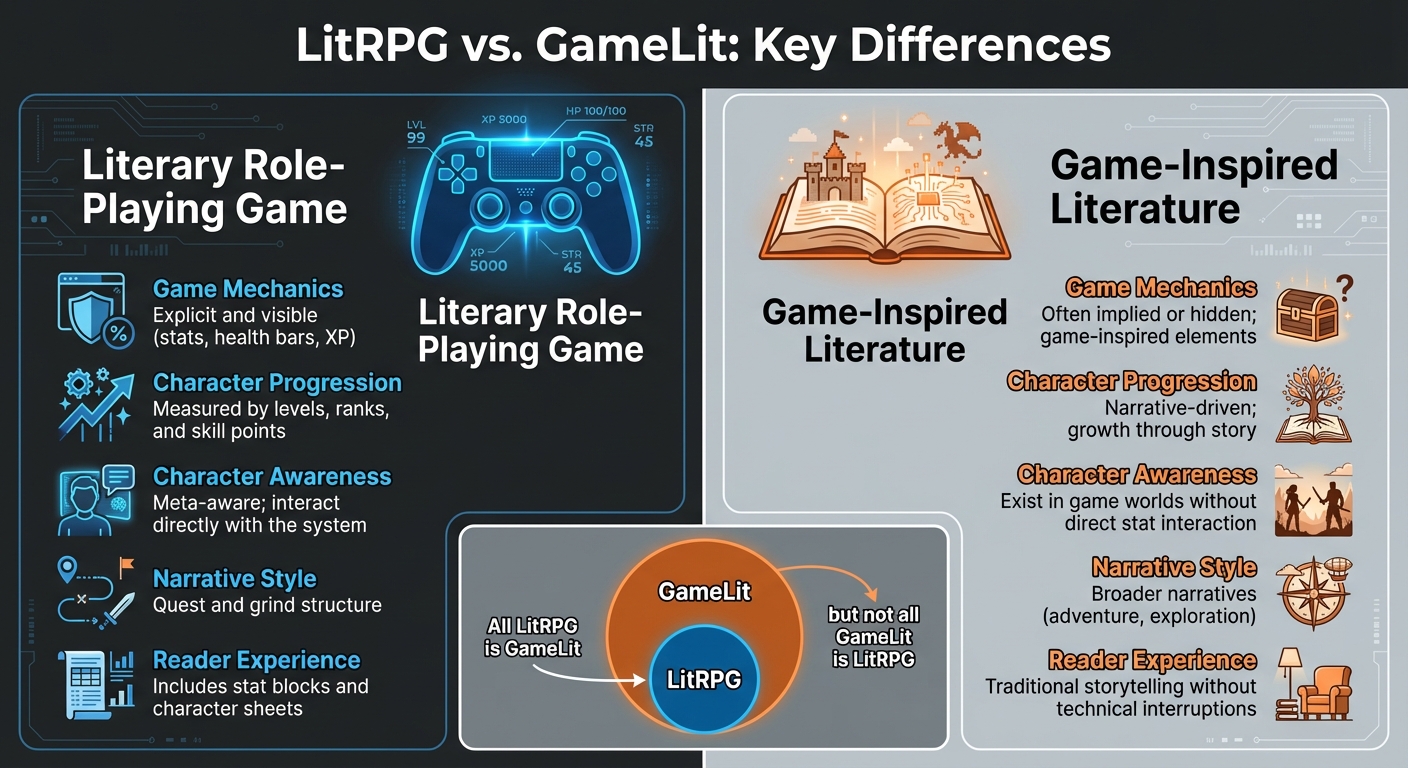
LitRPG vs GameLit: Key Differences in Game Mechanics and Storytelling
What Defines LitRPG
LitRPG, short for Literary Role-Playing Game, is a genre where game mechanics take center stage. In these stories, characters actively engage with stats, levels, and experience points - elements that feel like they’re pulled straight out of a video game. Think health bars, skill trees, and XP notifications. These aren’t just decorative details; they’re integral to how the plot moves forward.
In LitRPG, characters are often aware of the system they’re part of. They check stats, optimize builds, and work within the game’s rules to progress. As author Conor Kostick puts it:
"LitRPG is a literary genre where games or game-like challenges form an essential part of the landscape. A work in this genre simultaneously narrates the story of characters inside and outside of the game-world."
The level of detail, or "crunchiness", can vary. "Crunchy" LitRPG includes heavy stat tables and detailed calculations, while "creamy" LitRPG leans more on storytelling with fewer numerical interruptions. Regardless of style, the genre ensures readers get enough details to imagine building their own character in that world.
What Defines GameLit
GameLit, on the other hand, acts as a broader category that includes any story set in a game-like world or featuring game-inspired logic. Unlike LitRPG, GameLit doesn’t require explicit mechanics like stat sheets or XP notifications. Instead, it focuses on the narrative and the characters' experiences in these game-like settings.
As GameLit author D. J. LeJeune explains:
"Many consider Gamelit a broader genre than LitRPG, with LitRPG falling under its umbrella."
In simpler terms, all LitRPG stories are GameLit, but not all GameLit stories are LitRPG. GameLit appeals to readers who enjoy the thrill of game-inspired worlds but don’t necessarily want to dive into detailed stats or mechanics. It’s ideal for fans of traditional fantasy or sci-fi who enjoy a gaming twist without the technical layers.
LitRPG vs. GameLit Comparison
To better understand how these genres differ, here’s a side-by-side look at their defining features:
| Feature | LitRPG | GameLit |
|---|---|---|
| Game Mechanics | Explicit and visible (e.g., stats, health bars, XP) | Often implied or hidden; focuses on game-inspired elements |
| Character Progression | Measured by levels, ranks, and skill points | Driven by the narrative; growth unfolds through the story |
| Character Awareness | Characters are meta-aware and interact with the system | Characters exist in game worlds without direct stat interaction |
| Narrative Style | Often follows a "quest and grind" structure | Explores broader narratives like adventure and exploration |
| Reader Experience | May include stat blocks or character sheets for immersion | Focuses on traditional storytelling without technical interruptions |
This breakdown highlights how each genre offers its own flavor of storytelling, catering to different reader preferences while sharing a foundation in game-inspired worlds.
sbb-itb-2566684
Must-Read LitRPG and GameLit Books
Featured Books from Sababa Books

If you're diving into LitRPG and GameLit, The Gilded Rebellion by Rebecca Vale and The Lifeline Protocol by Sera Kane are excellent starting points. These books masterfully blend intricate magic systems with clear character growth, delivering the kind of game-inspired storytelling that fans of the genre crave. Packed with action and depth, they offer a perfect introduction to progression fantasy, appealing to both newcomers and seasoned readers.
While these titles stand out, there's a wealth of other works that have helped shape and define this genre.
Other Popular Books and Authors
Some authors have become pillars of the LitRPG and GameLit genres, creating stories that resonate with fans worldwide. Aleron Kong, often referred to as the "Father of American LitRPG", is a prime example. His The Land series has amassed over 100,000 5-star reviews and was even named Audible's Customer Favorite of the Year. Kong himself describes LitRPG succinctly:
"The true definition of a LitRPG is a story that makes you feel like you are playing a video game."
Another standout is Matt Dinniman, whose Dungeon Crawler Carl not only reached the #2 spot on The New York Times Audio Fiction best-seller list in March 2025 but also sparked a television adaptation, which began production in late 2024.
For readers seeking a unique take on the genre, Shirtaloon's He Who Fights With Monsters offers the adventures of Jason Asano, a protagonist navigating a magical world with a distinct leveling system. And, of course, Ernest Cline's Ready Player One serves as an iconic entry point into GameLit, blending virtual reality with a gripping narrative.
Other influential authors include Dakota Krout, who pioneered the "Dungeon Core" subgenre with his The Divine Dungeon series. Russian authors like Dmitry Rus (Play to Live) and Vasily Mahanenko (The Way of the Shaman) also played a key role in laying the groundwork for the genre’s global popularity.
Final Thoughts
Why You Should Read LitRPG and GameLit
LitRPG and GameLit stand out because they offer something unique: clear, measurable progress for their characters. Instead of relying on vague notions of growth, these genres let readers track every step of the hero's journey through stats, levels, and experience points. As Paul Bellow explains:
"LitRPG is a book genre that allows readers to experience an RPG in a narrative format".
This structure creates a distinct kind of suspense. You're not just invested in whether the hero will survive their next challenge - you’re also wondering if they’ve earned enough XP or fine-tuned their abilities to succeed.
For gamers, these books are like a condensed version of their favorite games, delivering the same immersive experience in a format that fits into any schedule. And for readers, there’s a satisfaction in knowing that every power or skill the character gains is the result of effort and strategy, not just fate.
The genre's popularity continues to grow, as shown by major milestones like Matt Dinniman’s This Inevitable Ruin hitting #2 on The New York Times Audio Fiction best-seller list in March 2025. With subgenres ranging from dungeon crawlers to apocalypse adventures, there’s something for everyone, whether you're a gamer or just looking for a gripping story.
Explore LitRPG and GameLit at Sababa Books
Ready to dive into the world of LitRPG and GameLit? Sababa Books has a curated selection of standout titles that combine intricate magic systems with clear, satisfying character progression. Start with The Gilded Rebellion by Rebecca Vale or The Lifeline Protocol by Sera Kane to experience thrilling action, rich storytelling, and the kind of progression that defines the genre. Explore the collection and find your next favorite series today!
FAQs
How are LitRPG and GameLit different from traditional fantasy books?
LitRPG and GameLit bring a fresh twist to fantasy storytelling by weaving game mechanics - like stats, levels, and progression systems - directly into the narrative. In these genres, characters often navigate game-inspired worlds, tackle quests, and level up, much like the experience of playing video games or tabletop RPGs.
Unlike traditional fantasy, which leans heavily on intricate world-building, magic systems, and sweeping hero arcs, LitRPG and GameLit introduce a structured, interactive dynamic. Characters’ growth and obstacles are explicitly tied to game-like rules, offering a storytelling approach that strikes a chord with gamers and fans of goal-driven, immersive adventures.
How do characters interact with game mechanics in LitRPG novels?
In LitRPG novels, the story revolves around characters who interact directly with game mechanics. These characters often have stats, skills, and levels that evolve as the story unfolds, much like in role-playing video games. As they gain experience points, level up, and unlock new abilities, these changes actively shape their decisions and actions.
What sets this genre apart is how these mechanics are woven into the narrative. Battles, for example, hinge on character stats, while quests demand smart use of skills and resources. This fusion of storytelling with game systems pulls readers into an engaging world where the impact of every in-game action is both visible and meaningful to the plot.
Why are LitRPG and GameLit novels so popular?
LitRPG and GameLit novels have captured the hearts of readers by blending the thrill of gaming with rich, immersive storytelling. These genres pull readers into worlds where characters grow stronger by leveling up, mastering new skills, and tackling challenges - mirroring the mechanics of video games or tabletop RPGs. This combination delivers a reading experience that feels dynamic and interactive.
The explosion of online gaming and MMORPGs has played a big role in the genre's popularity. These novels resonate with gaming enthusiasts by reflecting the culture they’re already passionate about. And with the rise of cutting-edge gaming tech, like virtual reality, these stories feel more timely and relatable than ever. Add to that the growing number of indie authors diving into these imaginative worlds, and it's easy to see why LitRPG and GameLit have become go-to genres for gamers and fantasy lovers alike.