5 Ways Fan Art Boosts Book Marketing
Fan art isn't just fun - it’s a powerful tool for authors. It helps you connect with readers, promote your work visually, and grow your audience. Here's how fan art can supercharge your book marketing:
- Social Media Buzz: Share fan art on Instagram, TikTok, and more to increase engagement. Posts with images get up to 150% more retweets and 36% higher engagement on Instagram.
- Promotional Materials: Use fan art in ads, pre-launch campaigns, and even physical items like bookmarks or banners.
- Fan Art Contests: Host contests with clear themes and prizes to encourage participation and build community.
- Event Promotion: Use character art to make event announcements stand out and attract attention at conventions or signings.
- Themed Content: Create “Meet the Cast” pages, merchandise, or galleries to keep readers engaged and strengthen your brand.
Fan art not only increases visibility but also deepens reader connections. Whether shared online or turned into physical products, it’s a smart way to market books, especially in visual genres like portal and epic fantasy and LitRPG.
Social Media Engagement Statistics for Fan Art Marketing
How To Use The Book Character Art You Commissioned
sbb-itb-2566684
1. Share Fan Art on Social Media
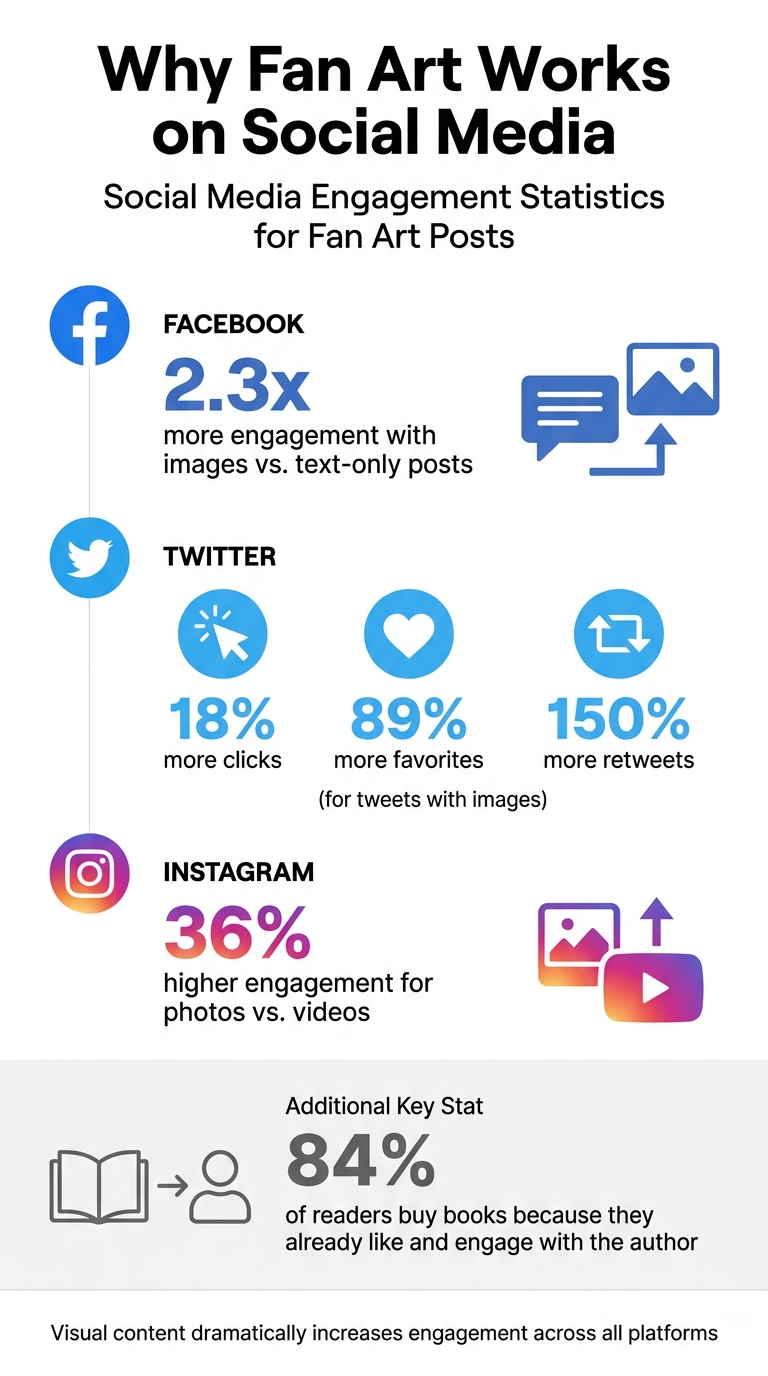
Sharing fan art on platforms like Instagram, Twitter, and Facebook provides eye-catching content that grabs attention. Posts with images on Facebook see 2.3 times more engagement than text-only posts, while tweets with images generate 18% more clicks, 89% more favorites, and a whopping 150% more retweets. On Instagram, photos outperform videos, driving 36% more engagement. These stats underline how each platform plays to its strengths.
Instagram shines with visual posts and Reels, Twitter thrives on quick interactions via retweets, and Facebook groups create spaces for deeper engagement with your audience. Author Jennifer Niven, for example, uses #FanArtFriday to showcase fan creations on a regular basis, encouraging a consistent flow of submissions.
Always tag the artist and encourage followers to support their work. This small gesture not only shows appreciation but also inspires other artists to contribute, while extending your reach to the artist's audience. As Leila Hirschfeld from BookBub puts it:
"A little bit of recognition can go a long way to foster a relationship with fans and maintain a dedicated readership".
Pairing fan art with questions is another great way to spark conversation. For instance, ask followers to imagine a character’s room or suggest the next scene to illustrate. Considering that 84% of readers buy books because they already like and engage with the author, these interactions help build strong loyalty that can lead to more sales.
Fan art isn’t limited to illustrations - share tattoos, cosplay, themed crafts, or even "bookish" candles inspired by your story. You can also cross-post TikTok fan creations as Instagram Reels to reach broader audiences and set up Pinterest boards as permanent galleries for fan submissions, giving the art a home beyond the fleeting nature of social feeds. Sharing fan art in these ways amplifies your book’s visibility and strengthens your overall marketing efforts.
2. Include Fan Art in Promotional Materials
Fan art can turn promotional materials into visually striking pieces that immediately grab attention. For instance, when announcing a sale or discount, overlaying the information onto character art can create graphics that stand out and draw readers in.
Book launch campaigns especially benefit from incorporating character art. Social media carousels or website galleries featuring "Meet the Cast" content help readers get to know your characters before the book even hits shelves. Jan, the founder of FramedFantasy, explains:
"Character reveal posts consistently outperform cover reveals on BookTok and Bookstagram. Readers love putting a face to a name before they even open the book".
By integrating fan art into pre-launch campaigns and promotional designs, authors create a seamless way to extend visual engagement across platforms.
A great example of this approach is author Niamh Rose, who, in June 2025, used character illustrations to promote preorders for Fate of the Fiver on social media. She credited the artists by tagging their Instagram handles, which not only showcased the book’s aesthetic but also supported the artists by promoting their portfolios. This kind of collaboration strengthens relationships with fan artists while fostering a deeper connection between readers and the story.
Fan art also works well for physical marketing. High-quality fan art can be repurposed for bookmarks, prints, banners, and even crowdfunding campaigns, creating a vivid and tangible brand identity that aligns with the book’s themes. However, always ensure you have secured commercial usage rights before using fan art for advertisements, book covers, or merchandise. Whether digital or physical, fan art plays a key role in building a comprehensive and engaging promotional strategy.
3. Run Fan Art Contests
Fan art contests are a fun way to engage readers and create buzz around your work. The key to success is keeping the prompts specific and easy to approach. Instead of asking for broad interpretations, focus on something like a single scene or a character sketch. Dominic de Souza, founder of LegendFiction, highlights how this approach fosters a sense of community:
"Invite your fans to get playful and creative with you! ... inviting your fans to create with you helps them to see each other! It shows them that there are other readers and world-followers like them."
Once your theme is set, offering modest but meaningful prizes can drive participation. Combine physical rewards like signed books or custom bookmarks with unique experiences, such as a short Zoom call, a character cameo in your next story, or a social media shoutout. For example, in May 2025, Yen Press ran the Omniscient Reader's Viewpoint Fanart Contest. Their grand prize included a bundle of seven comic volumes (with Volume 1 signed by artist Sleepy-C) and a signed novel. They also introduced a "Reader's Choice" category, where public voting encouraged participants to share the contest with their own networks.
Clear guidelines are essential for a smooth contest. Specify details like format, resolution (e.g., 300dpi), and submission requirements. A great example is the "Teens Talk Cover Contest" in July 2021, organized by Teen Ink and teen author Maria Proulx. Artists were tasked with creating cover art based on a synopsis, adhering to a 6x9 portrait format at 300dpi. The winning design became the actual book cover. Including a permission clause in your rules is also important. Dominic de Souza suggests a simple approach:
"By entering, you're cool with me sharing your entry on my blog and socials so we can all enjoy your brilliance."
To amplify the contest's reach, showcase all entries in a creative way. You could create a blog gallery, compile a YouTube reel, or encourage the use of a dedicated contest hashtag. In late 2025, author Lindsay Schopfer promised participants:
"If we receive enough artwork, I'll create a YouTube video featuring all accepted submissions, sharing my honest reactions to each piece!"
Fan art contests don’t just generate exciting content - they also strengthen the bond within your reader community.
4. Generate Event Excitement with Fan Art
Fan art can turn a simple event announcement into an eye-catching visual experience that draws attention and encourages participation. Whether you're hosting a book signing, a virtual Q&A, or making an appearance at a convention, character art acts as a visual centerpiece that makes your promotional efforts pop. According to FramedFantasy, posts featuring character reveals consistently perform better than cover reveals on platforms like BookTok and Bookstagram, making them an excellent choice for sharing event dates and details. Plus, this strategy works equally well for both online and in-person events.
For conventions and other physical events, fan art can create a strong visual identity for your booth or table. Think banners, bookmarks, and prints showcasing character illustrations - these not only attract attention but also give attendees something memorable to take home. Jan, the founder of FramedFantasy, highlights this benefit:
"Character art becomes the visual identity of your brand as an author. It gives people something tangible to take home and remember you by."
Fan art can also elevate giveaways, boosting participation and excitement. Instead of offering just a signed book, consider including art-inspired items like character cards, illustrated postcards, or custom stickers. Leila Hirschfeld, Account Manager at BookBub, explains why this tactic works:
"In exchange for taking an action you specify - for example... submitting fan art - readers get something in return that makes them excited to participate."
The numbers back it up: visual content drives engagement. Commissioning a high-quality character portrait typically costs between $80 and $250, but the investment pays off by leaving a lasting impression on your audience and enhancing your event's appeal.
5. Develop Themed Content from Fan Art
Fan art can do more than just generate buzz on social media - it can create a whole ecosystem of themed content that keeps readers engaged long after your book's release. For instance, setting up a "Meet the Cast" page on your website, filled with commissioned or fan-submitted art, can be a game-changer. These character galleries are often among the most visited sections on indie author sites, drawing readers in to explore more of your work, sign up for newsletters, and share the visuals with their friends. Essentially, this kind of digital gallery becomes a hub for engagement and a springboard for future interactive campaigns.
Social media is another great space to keep the momentum going with fan art. A campaign like #FanArtFriday encourages fans to regularly share their creations, while cosplay challenges let readers bring your characters to life. Instagram, in particular, is a goldmine for visual campaigns - photos on the platform get 36% more engagement than videos, making it perfect for showcasing fan art and cosplay submissions. You can also curate Pinterest boards filled with character inspirations, costume ideas, and fan contributions to extend your reach even further. These digital campaigns can easily spill over into physical products, helping to cement your brand in your audience's minds.
Fan art can also inspire exclusive merchandise that strengthens the bond between readers and your work. A great example is Orbit Books' 10th-anniversary edition of Leviathan Wakes by James S. A. Corey. In July 2021, Creative Director Lauren Panepinto discovered minimalist fan art by Jay Clark on Etsy and licensed it for the special edition cover. The result? A striking design featuring fluorescent magenta inks, blue foil, and hand-sprayed magenta edges. The fan art-inspired cover was so successful that it set the tone for future editions in the series. As Panepinto explained:
"I love that this edition got to honor both the original book and the Expanse fans, and I love that I got to use a fan's work in the edition."
When collaborating with artists on merchandise - whether it's bookmarks, prints, or rewards for a Kickstarter campaign - make sure to secure commercial usage rights in writing. Personal use licenses won’t cover things like book covers or promotional materials. To get the best results, focus your art briefs on the emotional depth and personality of your characters. Instead of just describing physical traits, highlight the essence of their stories to truly capture their spirit.
Conclusion
Fan art offers a dynamic way to connect with readers and elevate your marketing efforts. Sharing character portraits on social platforms, hosting fan art contests, or featuring a "Meet the Cast" section on your website creates an interactive experience that draws readers in and keeps them engaged.
Beyond sparking creativity, these approaches can lead to tangible marketing results. For instance, while traditionally published books average around 3,000 lifetime sales, authors who actively involve their fan communities often see far greater success. Take indie author Britt Andrews, for example. By fostering a vibrant Facebook group where fans share art and discuss her work, she reached over seven figures in royalties. Her community even met a $5,000 crowdfunding goal in just five minutes.
For authors in genres like fantasy and LitRPG, where visual storytelling is key, fan art can be a game-changer. Posts revealing character designs often generate significant engagement, making them a cornerstone of a broader marketing strategy that spans platforms like Instagram and Kickstarter.
Whether you're investing in professional character art (ranging from $80 to $250) or encouraging fans to create and share their interpretations, incorporating fan art into your strategy strengthens your connection with readers. As PublishDrive aptly puts it:
"With a group of dedicated book fans, you go beyond just selling books; You sell your stories as an experience".
Start small - share a fan-created piece or organize a contest - and watch your community grow into a loyal, enthusiastic audience that supports your long-term writing journey.
FAQs
Do I need permission to share fan art?
Sharing fan art requires the creator's consent. Without their permission, you could infringe on intellectual property rights. Whether you're sharing or commissioning fan art, always make sure to get the artist's approval before posting or distributing their work. Respecting their rights is crucial.
Can I use fan art in ads or merchandise?
Yes, fan art can be used in ads or merchandise, particularly if it’s commissioned or specifically created to promote your story or fictional universe. It’s a great way to grab attention, connect with your audience, and visually highlight what makes your book stand out.
How do I run a fair fan art contest?
To host a fair and engaging fan art contest, start by establishing clear rules and submission criteria. These might include aspects like originality, how closely the artwork ties to your book, and any specific format requirements. Make sure to announce the contest publicly, detailing how submissions will be judged and what prizes are up for grabs. Transparency is key - participants should fully understand the rules to avoid any misunderstandings.
Promoting the contest on social media is a great way to spread the word and build excitement. Interact with participants by liking, commenting, or sharing their entries to create a welcoming and interactive atmosphere. This not only fosters a sense of community but also encourages authentic fan participation.