
How Pacing Impacts Progression in GameLit
Pacing and progression are the backbone of LitRPG and GameLit storytelling. They determine how characters grow, how challenges unfold, and how readers stay engaged. In GameLit, progression refers to measurable character growth - like leveling up or unlocking skills - while pacing controls the timing and rhythm of these advancements. Together, they create a satisfying narrative flow.
Here’s what you need to know:
- Progression Spine: Map out a clear growth path for your protagonist (e.g., levels, ranks, skills) to maintain consistency and direction.
- Sync Milestones with Plot Beats: Tie level-ups or advancements to key story moments like risks, sacrifices, or revelations for emotional impact.
- Balance Difficulty Curves: Start with fast growth, slow it down mid-story, and introduce challenges that require strategy, not just power.
- Rotate Focus: Alternate between action, progression, and character-driven scenes to keep the story dynamic.
- Avoid Power Creep: Set clear limits on power, use setbacks or plateaus to deepen tension, and ensure growth feels earned.
GameLit thrives when pacing is carefully managed. Properly timed progression, tied to meaningful narrative stakes, keeps readers hooked and invested in the hero’s journey.
4theWriters: How to Write LitRPG Without Losing the Plot

sbb-itb-2566684
Structuring Progression Within Story Arcs
When it comes to pacing, having a well-defined progression arc is what keeps readers hooked. It gives them a clear sense of direction and deepens their connection to the story.
Building a Progression Spine
In GameLit, every story thrives on a measurable growth path - a progression spine - that runs from the first chapter all the way to the final boss. This spine could take many forms: a level system, a rank hierarchy like Iron → Bronze → Silver, or a series of unlockable skills. The key is consistency and visibility, so readers always know where the protagonist stands in relation to the world.
Before you even start writing, map out your protagonist's starting point and their ultimate power level. This big-picture plan ensures the progression remains consistent, even across multiple books, and helps you avoid writing yourself into a corner later on.
Once the spine is in place, the next step is to align key milestones with major plot events.
Syncing Progression Milestones with Plot Beats
With your progression spine established, you’ll want to pair each milestone with pivotal moments in the story. These level-ups or advancements aren’t just mechanical - they’re emotional turning points too.
"If level-ups are handed out like participation trophies, they lose their narrative weight. Instead, anchor level-ups to the marrow of your story: to moments of genuine risk, sacrifice, or revelation." – Paul Bellow, LitRPG Reads
Here’s how progression milestones naturally fit within a classic three-act structure:
| Story Phase | Narrative Action | Progression Milestone |
|---|---|---|
| Act I: Setup | Entry into world; Tutorial; First decision | Rapid early levels; Class/Skill selection |
| Act II: Escalation | Testing abilities; Partial revelations; Subplots | Slower mid-level growth; Skill specialization |
| Act III: Resolution | Major crisis; Irreversible choice; Final boss | Major power spike; Rank/Tier advancement |
The secret here is alignment. A rank advancement that happens after a near-death experience feels earned and impactful. On the other hand, random upgrades that pop up mid-chapter without any narrative weight can feel hollow. Tie every upgrade to a meaningful narrative cost - whether it’s sacrifice, trauma, or a hard-fought revelation - and readers will feel the significance of each step forward.
As you sync milestones with plot beats, keep an eye on the challenge curve to maintain the right balance.
Managing Difficulty Curves
Balancing challenges with character growth is one of the toughest parts of writing GameLit. If you get it wrong, the story loses its edge.
"If your character is unkillable by chapter ten, the remaining chapters have no tension." – Faye Lennox, Author
To avoid this, you need to calibrate challenges carefully. Early on, progression should be fast to hook readers and introduce the system mechanics. As the story shifts into Act II, slow things down - mid-level growth should require tougher challenges, smarter strategies, and genuine problem-solving. Then, during major climaxes, a significant power spike can serve as a satisfying reward that feels well-earned.
One effective strategy is to incorporate "walls" into your system. These are bottlenecks where progression halts until the protagonist overcomes a specific narrative or philosophical challenge. This creates a pattern of steady growth, hard stops, and meaningful leaps forward. It also prevents power creep and ensures that your character evolves as a person, not just as a collection of stats.
Balancing Pacing Across Combat, Story, and System Elements
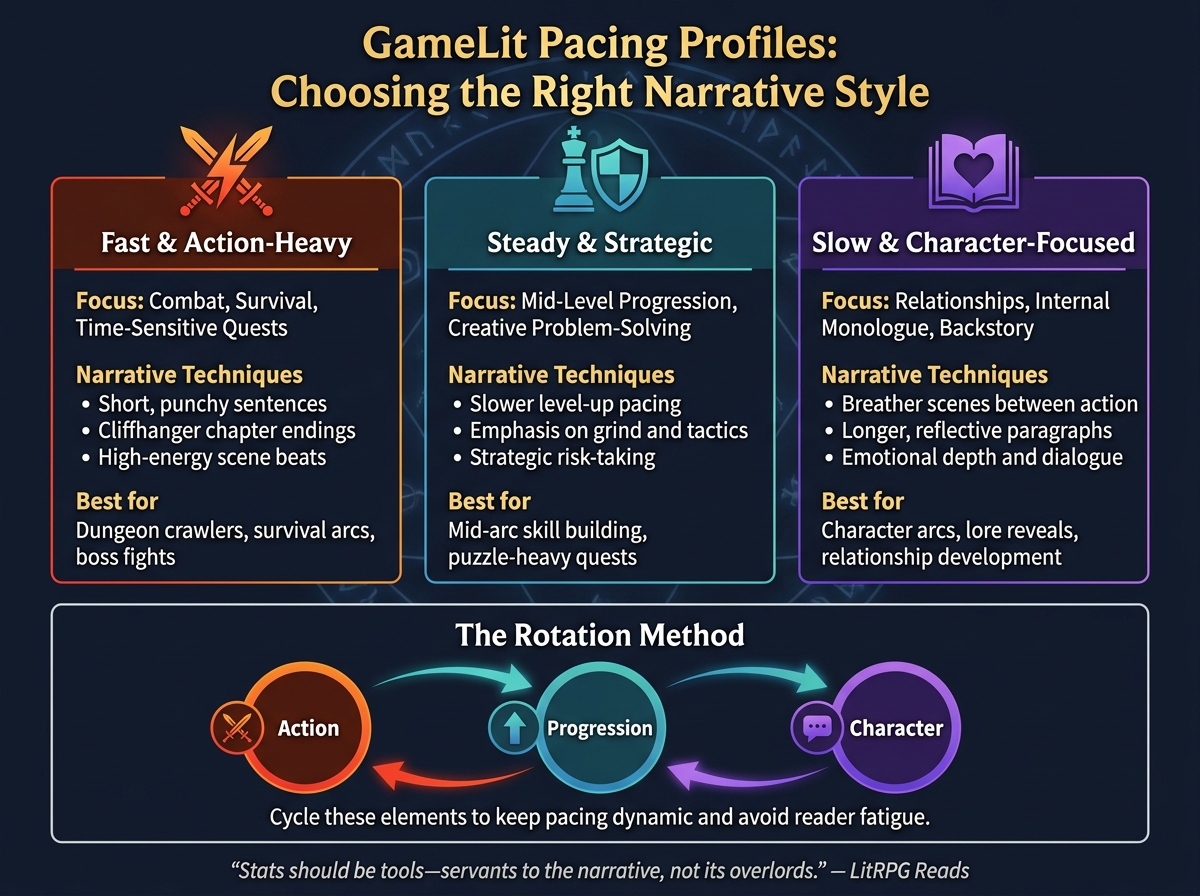
GameLit Pacing Profiles: Choosing the Right Narrative Style
Once your progression spine is in place and milestones align with plot beats, the next challenge is avoiding a monotonous reading experience. Too many fight scenes can exhaust the reader, while excessive system details can bog down the story. The key here is balance. Striking this balance allows you to choose a core pacing style that fits your narrative.
Choosing a Core Pacing Style
Before diving into your first chapter, determine the type of story you're telling. Your pacing style should reflect this vision right from the start.
| Pacing Profile | Focus | Narrative Technique |
|---|---|---|
| Fast & Action-Heavy | Combat, survival, time-sensitive quests | Short sentences, cliffhangers, high-energy beats |
| Steady & Strategic | Mid-level progression, creative problem-solving | Slower level-ups, emphasis on grind and tactical risks |
| Slow & Character-Focused | Relationships, internal monologue, backstory | Breather scenes, longer paragraphs, emotional depth |
While it’s fine to shift between profiles occasionally, having a dominant pacing style ensures the story feels cohesive. For instance, a fast-paced dungeon crawler that suddenly spends three chapters on backstory can feel disjointed unless the transition is intentional. Once your pacing style is clear, you can alternate scene types to keep the narrative engaging.
Alternating Between Progression and Narrative Beats
One effective way to maintain momentum is the Rotation Method. This involves cycling through three key elements: Action (combat or survival scenes), Progression (leveling up or unlocking skills), and Character (relationships, backstory, or internal decisions). This approach prevents any single element from overstaying its welcome while keeping the story dynamic.
To avoid the feeling of a "progress log", intertwine level-ups with meaningful character development. Jean-Louis Vill highlights this balance perfectly:
"A sequence of level-ups or new abilities that has no effect on relationships or stakes ends up feeling like a progress log rather than a story."
For smoother pacing, blend exposition into action. For example, reveal a skill's limitations during a duel or have an NPC share lore through tense dialogue. This keeps things moving while still delivering the system details that GameLit readers love.
Controlling Progression Frequency
Managing how often visible progression occurs is another way to maintain a steady rhythm. Progression moments should punctuate the narrative, not dominate it. Overuse them, and they lose their impact. Space them out too much, and readers may lose the sense of forward momentum vital to the genre.
Keep stat updates tied to critical moments, like allocating points or choosing between loot options.
"Stats should be tools - servants to the narrative, not its overlords." – LitRPG Reads
Structurally, aim for each chapter to achieve at least one tangible goal. Whether it’s a skill upgrade, defeating a mini-boss, uncovering a clue, or deepening a relationship, these milestones ensure even quieter, character-driven chapters maintain a sense of progress. This steady forward motion is what keeps GameLit readers invested and eager for more.
Sustaining Tension Through Pacing Choices
When a protagonist's growing power starts to overshadow the stakes, maintaining tension becomes essential. Carefully managing pacing and progression keeps the story engaging as both stakes and abilities evolve.
Avoiding Power Creep
Power creep happens when a character's abilities grow so much that challenges lose their impact. This is often called the "DBZ effect", where power levels escalate endlessly until they feel meaningless.
"Not planning these things out can lead to situations of continual power escalation... numbers getting so big that they don't really mean anything anymore." - Clark Rowenson, Magic Engineer
To avoid this, establish a clear limit for your character's power early on. This ensures that each step of growth retains its tension. Adding meaningful constraints - such as mana depletion, cooldowns, or limits on active abilities - can keep even highly skilled characters thinking strategically. Amir Barakat puts it well: "Stats are supposed to sharpen tension, not replace it. Mechanics should support wonder, not bury it under tooltips and damage formulas." In other words, stats should enhance the story, not overshadow it.
Using Setbacks and Plateaus
Plateaus are a deliberate pacing tool that forces characters to rely on creativity rather than raw power. When done right, they add depth to the story. However, setbacks need to feel earned. A loss tied to the protagonist's own decisions carries far more weight than one that feels random or unfair.
"The protagonist should face enemies they cannot beat yet, lose fights that cost them, and encounter problems that raw stats cannot solve. Setbacks make the eventual victory meaningful." - Faye Lennox
Even during a plateau, the story should continue to move forward. This can happen through developing relationships, uncovering pieces of lore, or having the character make a tactical breakthrough. Progress doesn’t have to be tied to numbers to feel impactful. These moments of struggle not only deepen the character’s journey but also set the stage for more rewarding climaxes.
Timing Major Progression Events
The timing of a character’s growth is just as important as how it happens. Progression moments resonate more when tied to real stakes or sacrifices, rather than being handed out predictably after every encounter. The "staircase" model is a great approach: steady, gradual growth punctuated by high-tension plateaus, then a sudden jump in power that feels earned. This pacing builds anticipation and makes breakthroughs feel like major events.
To keep readers hooked, consider ending progression scenes with unresolved questions or lingering challenges rather than tidy resolutions. Leaving an open loop creates a sense of forward momentum. And remember, if a level-up doesn’t shift the character’s abilities or perspective, it risks losing its narrative weight. By tying growth to genuine risks and meaningful moments, you maintain tension while keeping the story exciting.
Conclusion: Crafting a Well-Paced GameLit Story
Pacing isn't just a technical detail - it’s the heartbeat of a story. It’s what keeps readers glued to the page or makes them drift away after a few chapters. And when progression feels earned, it’s the secret sauce that keeps readers invested from start to finish.
Key Takeaways for Writers
Progression in GameLit needs to feel meaningful, not mechanical. As Kiera Mensah aptly explains:
"Stats aren't just numbers. They're the echoes of your hero's journey, the drumbeat of danger, the arithmetic of hope."
Every stat increase, skill unlocked, or level-up should connect to a moment of genuine narrative impact. When done right, these moments add emotional weight and ensure challenges remain engaging rather than predictable.
To achieve this, focus on a deliberate progression curve. Early wins should hook readers quickly, the middle should challenge characters with creative obstacles, and the final breakthroughs should deliver satisfying payoffs. Balance is key - rotate between action, character development, and progression scenes to keep the pacing dynamic. Importantly, progression should create meaningful narrative dilemmas, not just serve as a series of numerical upgrades.
The genre itself has grown significantly in the last decade. According to LitRPG Reads:
"In 2016, the novelty of the mechanics carried the book. In 2026, the mechanics are the skeleton, but the story is the muscle."
This shift emphasizes the importance of storytelling in GameLit, where character growth and narrative stakes take center stage.
Exploring GameLit Through Sababa Books

For examples of well-paced GameLit storytelling, Sababa Books offers a variety of titles that showcase these principles. In The Gilded Rebellion by Rebecca Vale, Nyra Amaris’s forbidden shapeshifting magic - featuring forms like a Dire Wolf, Roc, and Stellar Phoenix - drives both the plot and her personal growth. Meanwhile, The Lifeline Protocol by Sera Kane follows Myra Steele in a post-apocalyptic world, where her mastery of Quantum Transformation Technology shapes her journey through a mission-based structure. Both stories demonstrate how thoughtful pacing and progression can elevate the reader’s experience.
FAQs
How do I plan a progression spine?
To craft a compelling progression spine, begin by clearly defining where your protagonist starts and where they should end up. This gives you a roadmap for their journey. Next, decide on the shape of their power arc - whether it’s linear, exponential, or an S-curve - and plan how the pacing will unfold at each stage.
Lay down the system rules early on so readers understand the framework. Start strong by engaging readers with quick, exciting early gains. As the story progresses, slow things down during the mid-levels to introduce challenges and obstacles. Add meaningful milestones, like unlocking new skills or abilities, to keep the journey rewarding.
To keep the progression gripping, make sure growth feels earned. Include moments of effort, setbacks, and even failures - this not only maintains tension but also makes the protagonist's achievements feel satisfying and well-deserved.
How often should level-ups happen?
Level-ups in GameLit should happen frequently enough to keep the story moving, but not so often that they lose their impact. Early on, levels tend to come fast. This hooks readers and lays out the rules of the game system. As the story progresses, level-ups slow down to reflect harder challenges and higher stakes.
To make each level-up feel meaningful, ensure it's tied to genuine effort or growth. Between major power boosts that drive the story forward, sprinkle in smaller skill gains. This keeps the pacing smooth while maintaining a sense of ongoing progress and tension.
How do I prevent power creep?
To keep power creep in check and maintain a sense of tension, it's important to establish clear boundaries, like mana caps or skill limitations. These ensure that progress feels deserved rather than effortless. Introducing soft caps - where further advancement offers diminishing returns - can also help balance growth. Another method is to phase out older abilities in favor of newer, more relevant ones.
Carefully planning power arcs is key. Include moments of setback or struggle to keep the journey interesting and grounded. Prioritize the story itself over mechanics, ensuring that challenges push players to think creatively rather than simply relying on higher stats. This approach keeps growth both meaningful and engaging.