
Checklist for Designing Reward Systems in LitRPG
Reward systems in LitRPG and GameLit novels are the backbone of character progression, keeping readers engaged through measurable growth like XP, loot, and skill upgrades. A well-designed system balances rewards with challenges, ensuring progression feels earned and ties into the story. Here's how to get it right:
- Start with Progression Mechanics: Use XP, leveling, and skill trees to create dynamic character growth.
- Balance Rewards with Difficulty: Rewards should match effort, avoiding power creep with tools like soft caps and diminishing returns.
- Vary Reward Types: Mix items, stat boosts, new abilities, and narrative perks like titles or reputation.
- Tie Rewards to Story: Make upgrades meaningful by adding narrative consequences or connections.
- Test and Refine: Use tools like progression curves to keep the system engaging across multiple volumes.
The best LitRPG systems make stats part of the story, creating emotional and mechanical growth that readers can see and feel.
Core Elements of Reward System Design
Setting Up Progression Mechanics
At the heart of any reward system lies experience points (XP) and the concept of leveling, core elements that distinguish Progression Fantasy and LitRPG. These mechanics have evolved to reward a variety of activities, from exploration to crafting, making progression feel more dynamic. Stat allocation plays a critical role here, allowing players to shape their characters' attributes in ways that reflect unique builds. Meanwhile, skill trees and class systems offer players strategic choices, helping define their characters' roles and identities.
Balancing Rewards and Power Creep
Reward systems must strike a careful balance to ensure progression remains engaging without undermining the challenge. Early levels are designed to be achieved quickly, while later ones require significantly more effort - mimicking the way real-world skills take longer to master as they advance. This balance is crucial for maintaining narrative tension, as Dr. Sarah Chen points out:
"The ideal progression function balances the reader's psychological need for frequent rewards with the narrative requirement for meaningful challenge".
Mechanics like soft caps and diminishing returns help avoid characters becoming overpowered. When further progression yields smaller benefits, players are encouraged to explore broader abilities rather than stacking vertical power endlessly. This promotes horizontal growth, where new tactical options and choices come into play.
To further refine balance, authors can incorporate systems like environmental scaling, where the world adapts to match the character's growth, or power banding, which limits active gear through mechanisms like attunement slots. These approaches help maintain difficulty and preserve the game's tension.
Creating Different Reward Types
A well-designed system doesn’t just focus on numbers - it uses a variety of rewards to enhance gameplay and storytelling. These rewards can be broken down into several categories:
- Tangible rewards: Items like weapons, armor, and consumables provide instant gratification and contribute to the in-game economy.
- Growth rewards: Stat points and level-ups offer measurable progress and a sense of accomplishment.
- Specialization rewards: Unlocking new classes or skill branches forces players to make meaningful decisions about their characters' development.
In addition to these, narrative and social rewards tie game mechanics to worldbuilding. For instance, rare titles, achievements, or reputation points can grant perks like tax exemptions, special legal rights, or access to restricted areas, creating a deeper connection between the character and the game world.
Lastly, meta rewards, such as temporary buffs or resource bar enhancements, add a layer of strategy during combat or other challenging scenarios. Together, these diverse reward types keep players engaged while enriching both the gameplay experience and the story.
sbb-itb-2566684
20Books Vegas 2023 Day 2 – Crafting Game Systems for LitRPG

Checklist for Designing Rewards
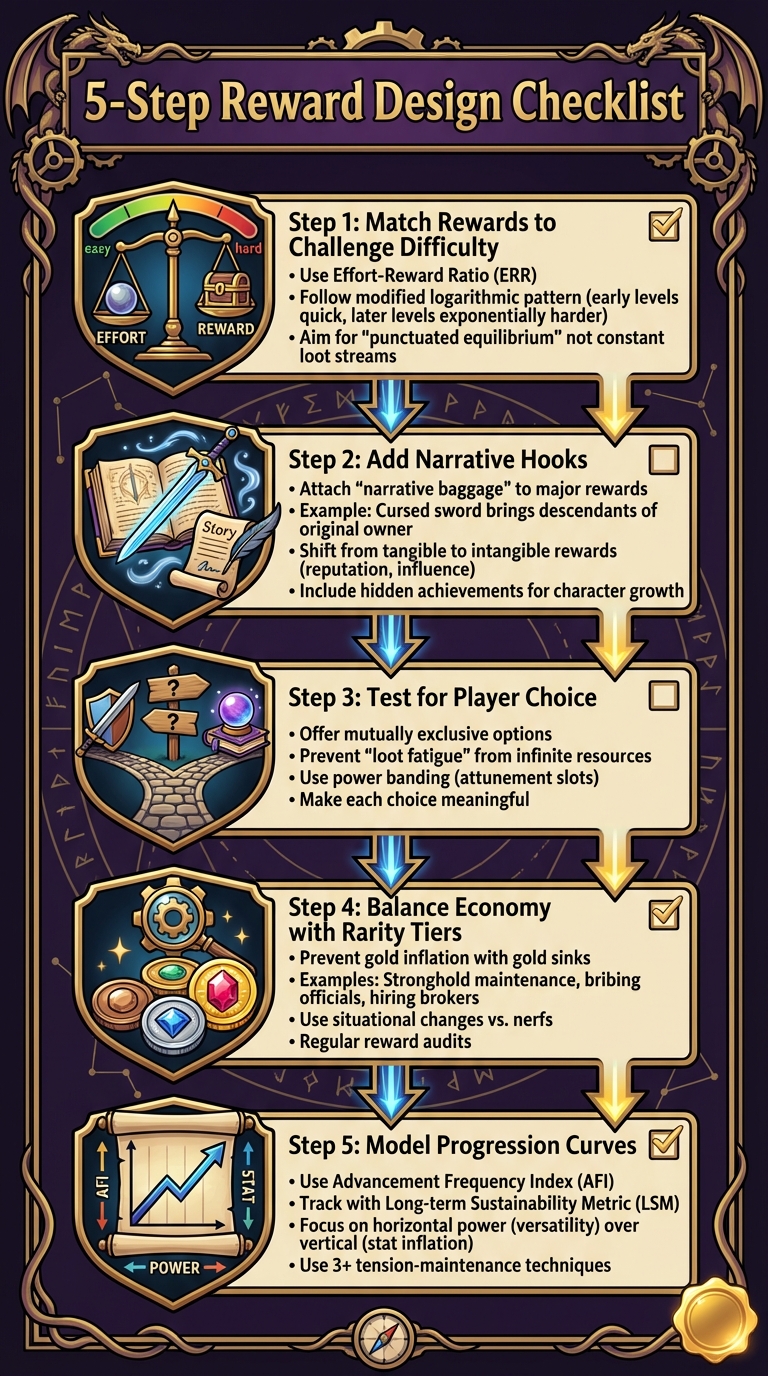
5-Step Checklist for Designing LitRPG Reward Systems
Step 1: Match Rewards to Challenge Difficulty
Start by quantifying rewards using the Effort-Reward Ratio (ERR). This ensures that tougher challenges yield more meaningful progress. A well-designed progression often follows a modified logarithmic pattern - early levels come quickly, but advancing further demands exponentially more effort.
Rewards should feel earned and tied to overcoming significant challenges, not just handed out for the sake of it. Instead of constant streams of loot, aim for "punctuated equilibrium" - periods of stability broken by hard-fought gains. This approach keeps players engaged and invested in their progression.
Once the rewards are quantified, connect them to the story with meaningful narrative elements.
Step 2: Add Narrative Hooks
Major rewards should be more than just mechanical upgrades - they should carry narrative weight. For example, a cursed sword might bring the attention of its original owner's descendants, or a powerful skill could come with hidden consequences, such as social backlash or the need to study forbidden knowledge. This concept, often called "narrative baggage", ties mechanical benefits to story developments.
As characters advance, consider shifting from tangible rewards, like weapons or items, to intangible ones, such as reputation or social influence. These can maintain balance in combat while adding depth to the story. Additionally, hidden achievements can reveal a character's internal growth or unlock plot-critical abilities based on their choices.
Step 3: Test for Player Choice
To keep rewards engaging, offer meaningful choices. Infinite resources can lead to "loot fatigue", where players lose the incentive to strategize or prioritize. Instead, present mutually exclusive options, such as funding a spy network or building a temple, forcing players to weigh their decisions carefully.
Power banding is another useful tool. By limiting active gear through systems like attunement slots, each equipment choice becomes significant, adding depth to decision-making.
Step 4: Balance Economy with Rarity Tiers
Gold inflation can occur when currency becomes meaningless because there's nothing worthwhile to spend it on. Combat this by introducing gold sinks - ways to spend money on temporary or non-permanent benefits, such as maintaining a stronghold, hiring information brokers, or bribing officials. These systems stabilize the in-game economy without arbitrarily draining player wealth.
For gear, use situational changes rather than outright nerfs. For instance, a fire-resistance ring might lose its value in an underwater dungeon, encouraging players to adapt their strategies. Regularly review rewards to prevent an oversupply of resources.
| Gold Sink Category | Narrative Benefit | Example |
|---|---|---|
| Logistics | Convenience/Speed | Hiring caravans, renting ships, fresh horses |
| Political | Influence/Access | Bribing officials, buying titles, funding galas |
| Strongholds | Utility/Base Operations | Construction, staff salaries, research funding |
| Services | Survival/Recovery | High-level rituals, information brokers |
Step 5: Model Progression Curves
To maintain balance, model progression curves and test your reward system thoroughly. Use tools like the Advancement Frequency Index (AFI) to measure how often meaningful growth occurs, and the Long-term Sustainability Metric (LSM) to evaluate whether your system can scale across multiple volumes.
Spreadsheets are invaluable for tracking experience requirements, stat gains, and rewards. This helps you identify potential power spikes or stagnation early on. Focus on horizontal power - giving characters versatile options and utility - rather than simply inflating stats with vertical power increases. In fact, incorporating at least three tension-maintenance techniques can significantly improve engagement compared to relying solely on power boosts.
Examples from LitRPG Works
Skill Trees in The Gilded Rebellion
Rebecca Vale's The Gilded Rebellion showcases how branching skill trees can create a sense of real player agency. Instead of following a predictable, linear progression, characters must make impactful choices - like prioritizing offensive tactics over defensive strategies. These decisions carry weight, shaping not only gameplay but also the reader's engagement with the story. The system hooks readers early with quick, easy levels before transitioning into a more challenging, effort-intensive progression. What sets Vale’s approach apart is her dual-track system, which blends numerical growth with emotional depth. This combination resonates strongly with readers, adding layers of satisfaction to the narrative.
While skill trees guide character development, loot mechanics often fuel the desire for exploration and risk-taking.
Loot Mechanics in The Lifeline Protocol

Sera Kane’s The Lifeline Protocol uses rarity tiers to encourage exploration. Rare items are strategically placed in less obvious locations, rewarding players who take risks with not just valuable gear but also narrative clues and strategic opportunities. This approach reinforces the importance of meaningful choices, as players must weigh the immediate benefits of acquiring resources against the potential long-term advantages of their decisions.
Custom Reward Examples for New Systems
Custom reward systems can elevate narrative depth by linking player achievements directly to the plot. One way to measure this connection is through the "Narrative Integration Coefficient" (NIC), which evaluates how seamlessly rewards tie into the story. Research shows that when rewards align with narrative stakes, engagement increases as readers experience both emotional and mechanical growth in parallel.
"The ideal progression function balances the reader's psychological need for frequent rewards with the narrative requirement for meaningful challenge." - Sarah Chen, Journal of Narrative Mathematics
When designing custom rewards, introducing soft caps through diminishing returns can help maintain balance. This prevents characters from becoming overly specialized and ensures the story remains dynamic and versatile.
Conclusion
Designing engaging LitRPG reward systems isn’t about crunching numbers - it’s about finding the sweet spot between mechanics and emotion. The best stories weave numerical progression with character development, creating what researchers call dual-track development. When emotional growth stays within 15% of mechanical progression, reader satisfaction increases by 73%. In this way, stats become symbols of personal growth, not just numbers.
Keep narrative tension alive by avoiding power creep. Soft caps and scaling systems ensure victories feel earned, not handed out. Research shows that the most engaging progression curves follow a modified logarithmic pattern - early progress is quick, but each higher level takes significantly more effort. This mirrors real-life growth, making the journey feel relatable and rewarding.
Adding variety to progression is just as important. Multiple paths, unexpected rewards, and meaningful decisions prevent monotony and keep readers hooked. When characters face tough trade-offs - like choosing between raw strength and strategic defense - readers become more invested, weighing those choices alongside the protagonist. This creates a sense of connection that raw stat boosts alone can’t deliver.
Most importantly, tie every level-up to real risk, sacrifice, or a moment of revelation. When mechanics feel like a natural part of the story’s world instead of a bolt-on feature, you’ve hit the mark. The best LitRPG systems make the math invisible by making it matter. The ultimate test? A system so integral that removing it would unravel the entire narrative.
FAQs
How do I prevent power creep?
To keep LitRPG stories engaging and balanced, it's crucial to handle power creep thoughtfully. Start by defining clear endgame power levels - this sets a cap on how strong characters can become, ensuring their growth feels purposeful rather than endless.
Another effective strategy is using balanced progression systems, such as logarithmic growth. With this approach, characters experience rapid gains early on, but their growth slows as they advance. This keeps earlier achievements relevant and prevents the story from turning into a series of repetitive power jumps.
Lastly, don't rely solely on external power increases. Blend internal character development - like emotional growth, moral dilemmas, or evolving relationships - with their rising abilities. This combination keeps readers invested and prevents characters from becoming overpowered or one-dimensional too quickly.
How do I tie rewards to the plot?
In LitRPG storytelling, rewards aren't just about leveling up - they're tools to deepen character development and enhance the plot. To make these rewards resonate, tie them to significant milestones, tough challenges, or key revelations. For example, a character might gain a new ability after overcoming a seemingly insurmountable obstacle or uncovering a hidden truth.
Show how these rewards shape the character's abilities, influence their decisions, or even alter their relationships. This adds depth to the narrative and keeps readers invested in both the story and the protagonist's journey.
Timing plays a huge role here. Well-timed rewards - like unlocking a critical skill right before a major battle - can elevate tension and make pivotal moments even more impactful. By weaving rewards into the fabric of the story, you ensure they feel earned and meaningful, rather than arbitrary.
What should I track in a progression spreadsheet?
In a progression spreadsheet, focus on tracking these essential elements:
- Experience Points (XP): Keep an eye on XP to gauge progress over time.
- Character Stats: Monitor attributes like strength or intelligence to see how your character evolves.
- Skill Levels: Track the mastery of specific abilities and skills.
- Milestones or Levels: Use these as clear markers for advancement.
- Resource Management: Oversee resources like mana or stamina to manage usage and recovery.
This approach helps maintain balanced character growth and keeps the story progression engaging.