5 Tips for Hosting LitRPG Book Discussions
LitRPG book discussions can be both entertaining and engaging if planned well. Here’s a quick guide to make your sessions more enjoyable:
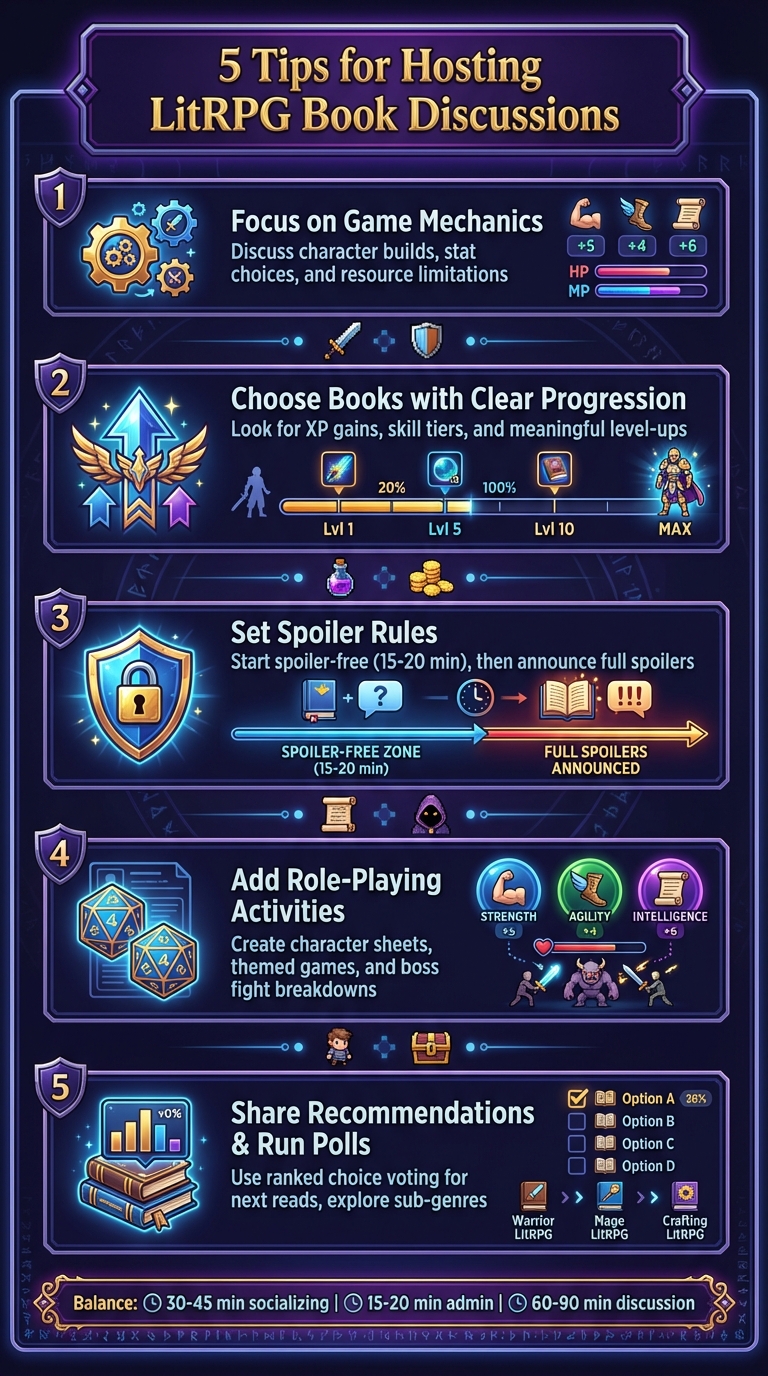
- Focus on Game Mechanics: Discuss how game mechanics influence the story, like character builds, stat choices, and resource limitations. Understanding these elements is central to the LitRPG and GameLit genres.
- Pick Books with Clear Progression: Choose titles where character growth and skill systems are easy to follow and meaningful to the plot.
- Set Spoiler Rules: Start with spoiler-free discussions before diving into the full story, and ensure respectful dialogue.
- Add Role-Playing Activities: Use themed games, character sheets, or boss fight breakdowns to make discussions interactive.
- Share Recommendations: Use polls and curated lists to decide future reads and explore sub-genres like Dungeon Core or Crafting.
These steps help balance story analysis with interactive fun, making your LitRPG book club sessions lively and rewarding.
5 Essential Tips for Hosting Engaging LitRPG Book Club Discussions
Tips for Starting a Successful Book Club 📚
sbb-itb-2566684
1. Create Discussion Questions About Game Mechanics and Progression
Dive into how game mechanics shape the story's narrative. For example, consider how the protagonist gained XP and leveled up. Did their stat choices - like prioritizing Charisma over Strength - reveal deeper character motivations? A decision like this isn't just tactical; it can hint at their goals, fears, or even their personality.
Does the protagonist's build reflect their personality and strategy? For instance, did focusing on agility over strength or choosing a specific skill tree highlight their playstyle? Or did they make choices that backfired later in the story? As Paul Bellow puts it, "A newly unlocked skill should reflect more than mechanical improvement; it marks a milestone in the protagonist's journey".
Were the rewards worth the effort? After a tough boss fight, was the loot or XP satisfying? Did the level-ups feel earned, or did they seem like convenient plot tools? According to LitRPG Reads, "The aim isn't just to report a character's health or experience points, but to craft a living system that breathes meaning into every gain, every risk, every hard-earned level".
Would the story work without the game mechanics? This is a key question. As the LitRPG Podcast points out, "If you can take out all the VR/LitRPG stuff out of a story and the novel is almost exactly the same, it probably isn't a LitRPG story". Mechanics like mana depletion, cooldown timers, or item durability should add stakes and tension, making them essential to the plot.
How did limited resources shape decisions? Think about moments when the protagonist faced constraints like low Mana or Stamina. Did these limits force clever solutions or create unexpected tension? These mechanics can make or break a LitRPG, separating gripping stories from ones where stats feel like an afterthought.
These types of questions encourage deeper conversations about how characters grow and how the narrative evolves. They also highlight the importance of choosing stories with clear, meaningful progression systems to keep discussions engaging.
2. Choose Books with Clear Character Progression
After exploring engaging game mechanics, the next step is finding LitRPG books where character progression is measurable and meaningful. Look for stories that incorporate clear systems for advancement, like XP gains, skill tiers, and level-ups. These mechanics shouldn't just be plot devices - they should provide tangible milestones your group can discuss and analyze.
Books with branching skill trees are particularly effective. For example, when characters choose between elemental magic or dark arts, those decisions affect both their abilities and the storyline. These choices not only reveal character motivations but also spark natural discussion points. As Paul Bellow aptly puts it:
You want to see the game mechanics that are used to describe what the character does with his avatar
Some great examples include The Gilded Rebellion by Rebecca Vale and The Lifeline Protocol by Sera Kane, both published by Sababa Books. These stories strike a balance between detailed stats and emotional depth, ensuring the numbers enhance the narrative without overpowering it.
Be cautious of books where characters become overpowered too quickly or where level-ups feel like lazy plot devices. The genre has evolved significantly. While The Land: Founding by Aleron Kong holds an impressive 4.17/5 rating on Goodreads with over 25,000 reviews, modern readers (2024–2026) are showing a preference for protagonists who endure real struggles and earn their power through effort and setbacks.
For an engaging group discussion, pick books that provide regular updates on character progress - like updated character sheets, new skills, or milestone achievements. These elements give your group concrete data points to dissect, leading to richer conversations than simply debating whether someone "enjoyed" the book.
3. Set Ground Rules for Spoilers and Respectful Discussion
Creating clear ground rules is key to keeping LitRPG discussions enjoyable and productive. Spoilers, in particular, can quickly derail a book club if not handled carefully. To avoid this, provide written guidelines - either printed or digital - before the meeting begins. This ensures everyone knows what to expect and protects members who might be reading at different paces.
Start with a spoiler-free window of about 15–20 minutes. This allows participants who haven’t finished the book to share their thoughts without worrying about spoilers. After this, make a clear announcement like, "We're now moving into full spoilers for the entire book." If your group is splitting the book into sections, strictly limit discussions to the agreed stopping point. As Chapter 25 Book Club puts it:
The golden rule is to be prepared: there might be a spoiler or two as we dive into the discussion!
Once spoilers are managed, focus on fostering respectful dialogue. Encourage members to stick to discussing the book’s content rather than making personal critiques. A great way to promote constructive conversation is to use "Yes, and…" statements instead of "No, but…" responses. For instance, someone might say, "I see your point, and I felt differently because I thought the protagonist's skill choices made the story more dynamic." This method keeps the discussion collaborative, even when opinions differ.
To ensure everyone has a chance to contribute, consider starting with a round-robin format where each person shares their initial thoughts before opening the floor to a more free-flowing discussion. As Carol Guttery, Founder of Libro Maniacs, explains:
A good book club creates an environment where everyone participates
If spoilers slip out too soon or debates get overly heated, it’s the moderator’s job to step in and refocus the conversation.
For books with mature themes, it’s important to set content warnings and discuss comfort levels at the outset. This ensures that everyone feels comfortable and safe engaging in the discussion, even if the material stirs strong emotions.
4. Add Role-Playing Activities and Themed Games
Turn passive discussions into engaging, game-like experiences with role-playing activities. Design games that reflect the book's systems and character development to make the story come alive.
Start by having participants create their own character sheets. Let them assign points to attributes like Strength, Agility, Intelligence, Luck, and Charisma. Then, introduce branching skill tree scenarios where they must make choices - like summoning skeletons or using life-draining abilities. As Paul Bellow, Founder of LitRPG Reads, puts it:
The joy of LitRPG isn't merely found in slashing through digital dungeons or watching numbers tick upwards; it's about seeing growth, agency, and transformation rendered tangible.
Next, bring the characters to life through live gameplay. Use cards or announcements to issue dynamic rewards and challenges. For example, grant "buffs" like Double Insight (where their next comment counts twice) or award EXP for insightful contributions. These small touches allow participants to "level up" during the discussion and mirror the book's mechanics.
For a more intense activity, break down a boss fight from the story. Have participants strategize using skill combinations or environmental advantages, just like the characters in the book. Tokens representing resources like Mana or Stamina can be used to "pay" for trivia answers or to "buff" their points, adding a layer of strategy to the game.
To set the mood, provide materials like character sheet templates, markers, paper for skill trees, and tokens for resource management. For an extra touch, offer themed snacks - try "Lembas-style" shortbread or drinks labeled as mana potions. As Izaic Yorks, Epic Fantasy Author, reminds us:
Atmosphere doesn't have to be big. It just has to be real.
5. Share Series Recommendations and Run Polls
Looking to keep the momentum going after finishing a book? Try sharing series recommendations and running structured polls. One way to do this is by categorizing future reads into sub-genres like Dungeon Core, Town Building, Crafting, or Progression Fantasy. This approach helps members quickly find titles that match their preferences and keeps the conversation flowing.
Take it a step further by formalizing your group’s selection process. Ranked choice voting is a great tool for picking the next read - it avoids ties and ensures the choice has broad support. For example, if your group enjoyed survival themes, you could poll options like Dungeon Crawler Carl or Defiance of the Fall. You can also explore thematic preferences, such as villain protagonists or intricate crafting systems, to guide the decision.
Point your group toward free resources like Royal Road or The LitRPG Podcast's searchable database for inspiration. For more curated options, check out Sababa Books, which features titles like The Gilded Rebellion and The Lifeline Protocol. After members dive into these resources, gather their feedback to shape future discussions.
To keep everyone engaged, try a round-robin format where each member highlights a standout element from a book - whether it’s a skill, a plot twist, or a character arc. Use “Yes, And” responses to build on each other’s ideas and ensure everyone stays involved. This collaborative approach makes the experience more dynamic and enjoyable.
Conclusion
Hosting successful LitRPG discussions calls for thoughtful preparation, a welcoming environment, and a focus on immersion. By crafting questions that explore game mechanics, setting clear ground rules, and weaving in themed activities, you can transform a casual chat into an engaging and dynamic experience. These approaches cater to both newcomers discovering the genre and seasoned hosts looking to revamp their discussion style.
Choosing the right book is crucial. Titles with consistent game-world logic and meaningful progression systems provide the foundation for deeper conversations. As epic fantasy author Izaic Yorks aptly states:
When the internal logic holds, the world holds. When it doesn't, the spell breaks.
Platforms like Sababa Books offer curated LitRPG collections featuring strong progression mechanics and immersive storytelling - perfect for fostering lively discussions.
Once you've picked the book, managing the flow of the discussion is just as important. Strive for balance: dedicate 30–45 minutes to socializing, 15–20 minutes to administrative tasks, and 60–90 minutes to focused dialogue. Encourage participation by using round-robin sharing or "Yes, And" techniques to keep the conversation inclusive and engaging.
Finally, try incorporating one new strategy from this guide into your next session. Whether you're dissecting skill-tree decisions or adding thematic games, these elements enhance the discussion and deepen the group's connection to the story. The best LitRPG clubs focus on connection rather than completion, ensuring members feel welcome - even if they haven’t finished the book. This approach prevents burnout and keeps the momentum alive.
FAQs
How do I pick a LitRPG that’s easy to discuss?
When picking LitRPG books, focus on stories with engaging characters, clear and gripping plots, and moments that stir emotions or provoke strong reactions. Seek out books that feature memorable scenes, relatable protagonists, or unexpected twists that keep the pages turning. While an eye-catching cover might grab your attention, prioritize content quality and reader reviews to guide your choice.
If you're new to the genre, start with books that have simple mechanics or straightforward storytelling. This makes it easier to follow the narrative and enjoy discussions about the book without feeling overwhelmed.
What spoiler rules work best for mixed reading progress?
When managing discussions with mixed reading progress, the golden rule is to hide spoilers for books that are unreleased or recently released. For books that have been out for over a year, open discussion is generally fair game. To ensure newer readers aren't caught off guard, make use of spoiler tags or clear warnings when talking about recent releases. This approach keeps the conversation enjoyable for everyone while protecting key plot twists for those still working through their reading lists.
What are quick role-play ideas for a LitRPG book club?
Interactive games can bring a fresh spark to your LitRPG book club, making meetings more engaging and collaborative. One fun idea is the "Extreme Makeover" game. In this activity, members take a character from the book and reimagine them in a modern-day setting. For instance, what would a medieval knight look like as a tech-savvy gamer in today's world? How would their personality and skills translate?
This kind of activity not only deepens immersion in the story but also adds an element of creativity to your discussions. It’s a great way to explore characters on a whole new level while keeping the conversations lively and entertaining for everyone.