Ultimate Guide to LitRPG Character Personalization
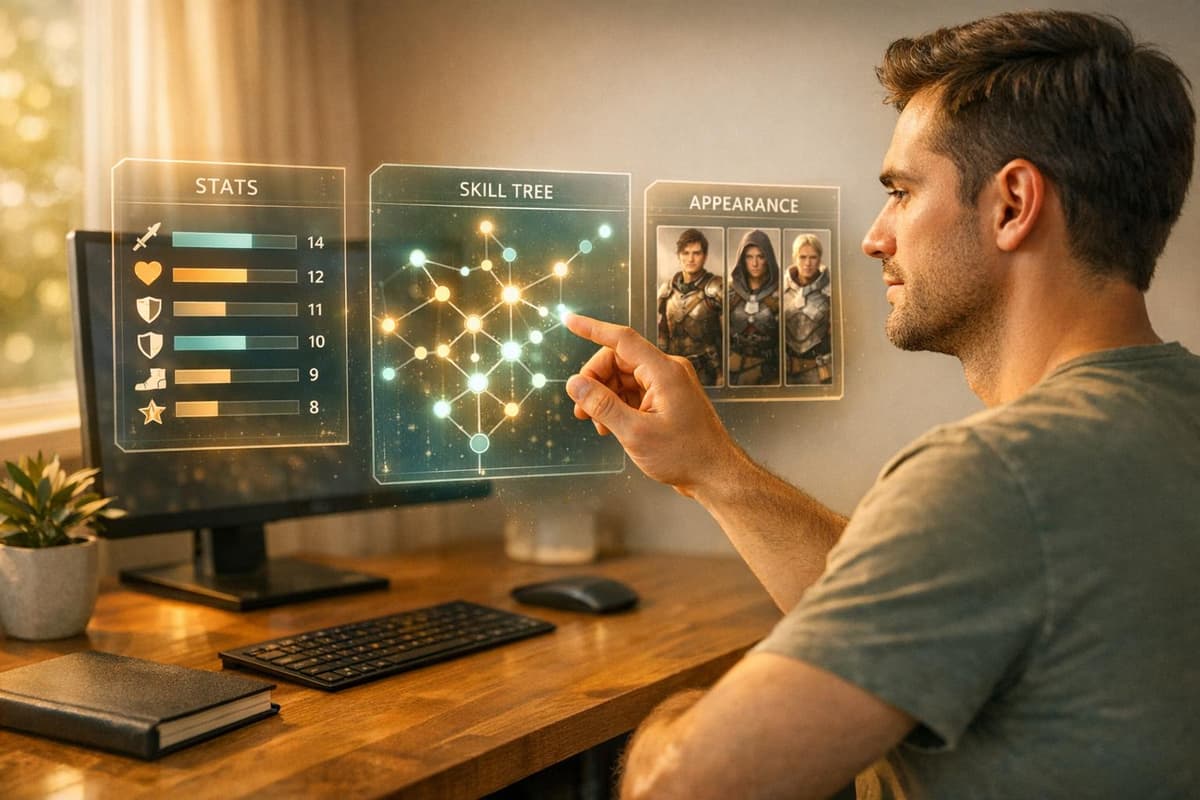
LitRPG stories thrive on their blend of game mechanics and storytelling, and character personalization is at the heart of this genre. From visible stats to skill trees and backstories, every decision shapes the character’s journey and the reader’s experience. This guide breaks it down:
- Stats and Attributes: Core stats like Strength, Dexterity, and Intelligence define abilities, while secondary stats (e.g., critical hit chance) refine gameplay. Balance is key - over-investing in one area can leave gaps in performance.
- Skill Trees: Choices in skill paths create unique playstyles, whether offensive, defensive, or hybrid. Decisions matter, with trade-offs shaping combat and survival strategies.
- Appearance: A character's look reflects their stats, role, and world. Details like scars, gear, and race-specific features add depth.
- Backstory: Past events influence skills, goals, and decisions. A concise backstory with elements like a defining wound or motivation enhances immersion.
- Progression: Level-ups tied to key moments keep growth meaningful. Systems should balance power with challenges, avoiding endless escalation.
LitRPG personalization isn’t just about numbers - it’s about creating characters whose mechanics and personality align, making their journey engaging and relatable.
How To Create A LitRPG Manga, Comic, Or Light Novel
sbb-itb-2566684
Core Stats and Attributes in LitRPG
LitRPG Core Stats Guide: Six Attributes and Their Effects
Characters in LitRPG stories are brought to life through detailed stats that blend narrative depth with game mechanics. These stats are more than just numbers - they shape a character's actions, growth, and effectiveness. Unlike traditional fantasy or progression fantasy, LitRPG dives into specifics, ensuring every detail counts.
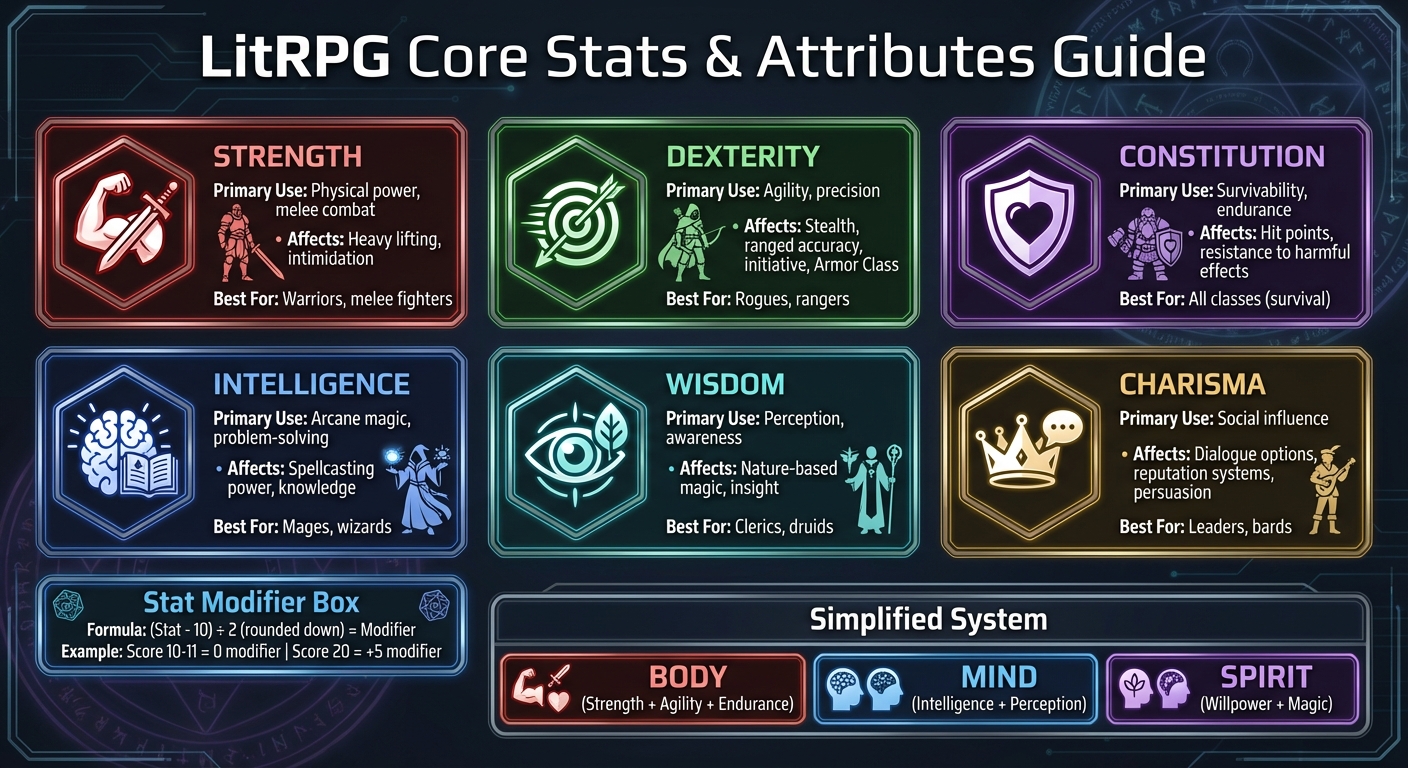
Most LitRPG systems borrow from classic tabletop role-playing games, often relying on six key attributes: Strength, Dexterity, Constitution, Intelligence, Wisdom, and Charisma. These stats influence everything from combat prowess to social interactions.
"It's not a LitRPG story if it doesn't feature stats, but those stats need to be designed and managed very carefully."
– Edwin McRae, LitRPG Author and Game Writer
Some authors simplify this system, opting for three broader categories - Body, Mind, and Spirit - to make things easier for readers while keeping the mechanics intact. For instance:
- Body might cover strength, agility, and endurance.
- Mind could include intelligence and perception.
- Spirit often governs willpower and magical abilities.
This streamlined approach avoids what some call "the Forest of Numeracy", where excessive numbers overwhelm the story.
Stats don’t work alone - they generate modifiers that determine success or failure in various tasks. In many systems, like those based on the D20 model, modifiers are calculated by subtracting 10 from the stat, halving the result, and rounding down. For example, a score of 10–11 gives a neutral (0) modifier, while a score of 20 provides a +5 bonus.
Common Stats and Attributes
Each of the six core stats plays a unique role in shaping a character's abilities:
- Strength: Essential for warriors and melee fighters, it governs physical power, heavy lifting, and intimidation.
- Dexterity: A must for rogues and rangers, it affects stealth, ranged accuracy, initiative, and Armor Class.
- Constitution: Vital for survivability, it influences hit points and resistance to harmful effects. In some systems, maximum HP is tied to the Body stat and character level.
- Intelligence: Powers arcane spellcasting and problem-solving.
- Wisdom: Enhances perception and nature-based magic.
- Charisma: Drives social interactions, unlocking unique dialogue options or rewards in worlds with reputation systems.
Many systems also include secondary stats, derived from core attributes. These might include:
- Damage output (Power)
- Critical hit chance and multiplier
- Armor penetration
- Defensive metrics like Armor, Resistances, and Avoidance.
Together, these stats create a foundation for building effective characters.
Balancing Stats for Different Character Builds
Crafting a strong character starts with defining their role. For example, are they a "burst fire mage with area-of-effect damage" or a "tank with high armor and crowd control"? This clarity shapes every decision about stats and skills.
"Good optimization is about clarity and focus."
– Runic Dice
Once the role is clear, focus on the three stats that fuel the character's core abilities. For instance:
- A fire mage might prioritize Intelligence, critical hit chance, and cast speed.
- A melee warrior might lean on Strength, Constitution, and Dexterity for accuracy.
Synergy is the goal. Every stat, skill, and gear choice should work together to enhance the character's role. For example, a two-handed sword user should prioritize melee-focused stats.
However, it's important to avoid over-investing in a single attribute. Diminishing returns mean that spreading points across secondary stats - like attack speed or penetration - can improve performance without compromising the character's primary role.
Balancing damage and survivability is often a challenge. High-damage builds might sacrifice defense, while tanks focus on effective health, combining raw hit points with damage reduction.
Finally, incorporating roleplay constraints can make a character feel more authentic. For example, if a character is built around using a two-handed sword, their stats and skills should reflect that choice, adding depth to both the mechanics and the story.
Aesthetic Customization: Creating a Character's Appearance
Visual Design and Character Representation
A character's look isn't just about style - it’s a visual cue to their abilities and personality. Their physical traits often align with their stats. For example, a character with high Strength might have a muscular build, broad shoulders, and powerful arms. In contrast, a high-Dexterity character might have a lean, agile frame, moving with grace. High-Constitution characters tend to exude vitality, with glowing skin and bright eyes, while those with low Constitution might appear frail or perpetually fatigued.
"A high-Strength character will be muscular: big biceps, broad shoulders, etc. ... A high-Constitution character looks generally 'hale' with bright eyes, healthy skin and hair."
– Scroll for Initiative
Race and class also play a big role in shaping a character’s appearance. Tieflings stand out with their horns and tails, Dragonborn with their scaled, draconic features, and elves with their sub-racial distinctions - Wood Elves often have earthy, nature-inspired aesthetics, while High Elves lean towards refined, sophisticated styles. Class-specific gear further enhances this visual identity. Barbarians might be clad in rugged furs and wield massive greataxes, clerics often bear holy symbols on heavy armor, and wizards carry arcane tools like staves or spellbooks.
Details like scars, tattoos, or even dark circles under the eyes can tell a character’s story without a single word. These visual elements hint at past battles, cultural heritage, or even personal struggles. A consistent color scheme - whether it’s a faction’s signature pink robes or a character’s dyed hair - can make them instantly recognizable and deepen their connection to the world they inhabit.
These design choices serve as the foundation for how the broader world influences every character’s look.
How World-Building Influences Aesthetic Choices
Just as a character’s stats define their abilities, the world they come from shapes how these traits are expressed visually. Environmental factors and cultural norms dictate everything from clothing materials to the symbols that signify status or allegiance. Harsh climates might require practical, weather-resistant gear, while lush, temperate regions allow for more decorative attire.
Social hierarchy also plays a role. High-ranking characters might wear luxurious materials like silk or intricately crafted armor, while lower-status individuals stick to simpler, more accessible fabrics. In some settings, specific colors or garments symbolize authority or tradition - pink robes might mark law enforcement, while tribal tattoos could signify a nomadic heritage. The level of technology or magic in a world further influences aesthetics. High-tech worlds might feature sleek cybernetic enhancements, while magical realms could include glowing enchantments or mystical tattoos.
"Grounding a fantasy world in realism doesn't make it boring. It makes it immersive."
– Michael Matson, Metaphor Publications
Even equipment can tell a story. A weapon with serrated edges, armor adorned with intricate engravings, or heirlooms passed down through generations can add layers of depth without a single line of dialogue. As characters grow stronger, their appearance should evolve too - whether it’s through acquiring legendary artifacts, magical effects that radiate power, or upgraded gear that reflects their journey.
Skill Trees and Abilities: Building Your Character's Skillset
Choosing Skills That Match Your Playstyle
Skill trees make character development a series of thoughtful choices rather than just a climb to the top. Each decision shapes not only how your character plays but also who they are.
The branching paths require you to weigh your options carefully. For instance, a Necromancer might have to decide between summoning skeletons for crowd control or focusing on life-drain abilities to ensure personal survival. Similarly, a Warrior could lean into defensive skills to shield their allies or opt for offensive techniques to deal maximum damage. These decisions come with trade-offs - choosing powerful offensive abilities often means giving up on defensive ones.
"Skill trees and class systems in LitRPGs offer a strategic dimension that goes beyond just acquiring power. They turn progression into a series of meaningful decisions rather than a straightforward race to the top."
– LitRPG Reads
For players who want even more flexibility, hybrid builds allow for creative customization. By combining skill trees, you can craft unique roles - like a support-tank hybrid blending healing magic with defensive spells.
Your character's backstory can also influence their skills. A Rogue’s sleight-of-hand might come from a history as a street performer, while a Mage’s choice between elemental magic or dark arts could reflect deeper moral conflicts. These connections make skill selection feel like an extension of your character’s personality rather than just a mechanical process.
Once you’ve chosen your skills, the next step is understanding how to unlock and upgrade them as your story unfolds.
How to Unlock and Upgrade Abilities
Unlocking abilities isn’t just about gaining power - it’s about marking key moments in your character’s journey. The best progression systems tie skill unlocks to important story events. For example, a character might gain a fire-based attack after conquering their fear of flames or unlock a leadership skill after resolving a team conflict.
"The best level-ups are hard-won... A newly unlocked skill should reflect more than mechanical improvement; it marks a milestone in the protagonist's journey."
– LitRPG Reads
Upgrading abilities also involves managing resources like mana, stamina, or cooldown timers. These limitations force characters to think strategically. When a critical ability is on cooldown, improvisation becomes essential, adding depth to combat and problem-solving. This approach ensures progression feels earned, avoiding the trap of handing out skills too easily.
Advanced progression often includes class evolution, where characters unlock specialized tiers or sub-classes tied to their destiny. Some systems feature rigid hierarchies - like the "Royal Court" path with exactly 17 levels of mastery. Others use more dramatic scaling, where advancing from level 100 to 101 demands exponentially more effort than earlier levels. This scaling creates a sense of achievement, making every new level feel like a major accomplishment.
Foreshadowing future abilities early in the story helps maintain narrative consistency. Hinting at “demigod” powers or legendary skills ensures that when these abilities are finally unlocked, they feel earned and logical within the world. System messages - often formatted in italics or brackets - provide instant feedback, making progression both visible and satisfying for the character and reader alike. Each upgrade not only enhances your character’s abilities but also reinforces their identity within the LitRPG universe.
Creating a Backstory for Your Character
A strong backstory brings your character to life, giving depth to their motivations and influencing the choices they make during gameplay. It’s not just about their abilities - it’s about understanding why they act the way they do. This backstory shapes everything, from the quests they take on to how they interact with NPCs and other players.
"Backstory is the lived past that shapes your character's present choices; the lens through which they see the world."
– Pamela Koehne-Drube, Writer Development and Community Lead, Novlr
To craft an effective backstory, focus on three essential elements: the Wound, the Want, and the Worldview.
- Wound: A pivotal negative event that shaped their life.
- Want: The goal or desire driving their actions.
- Worldview: The personal "rules" they’ve adopted because of their past.
For example, imagine a Rogue who was betrayed by their guild master. Their Wound is the betrayal. Their Want could be wealth, ensuring they never have to rely on anyone again. Their Worldview might be that trust is a weakness. These elements create internal conflicts, making the character’s growth feel earned rather than automatic.
Keep your backstory concise - 100 to 500 words is ideal. This allows you to highlight key events without bogging down the narrative. Instead of a full biography, focus on moments that explain your character's skills, fears, and goals. For instance, a former blacksmith’s apprentice might have crafting abilities or fire resistance, grounding these traits in their history. A well-thought-out backstory doesn’t just define your character - it influences their decisions and relationships as the game unfolds.
Connecting Backstory to Gameplay and Narrative
A well-integrated backstory doesn’t just enhance role-playing - it directly affects gameplay. It can create personal conflicts, trigger unique quests, and even shape how your character interacts with the world. Just like stats and visuals define a character’s capabilities, their backstory roots these traits in meaningful history. For example, unresolved issues from the past - like a family feud or a missing mentor - can naturally lead to specific quests or plot twists.
Sometimes, past traumas can even impose mechanical constraints. A character who survived a devastating fire might be weaker against fire-based enemies or struggle to wield fire magic effectively. These challenges force players to adapt their strategies, adding depth to the gameplay.
| Element | Impact on Gameplay | Impact on Narrative |
|---|---|---|
| Defining Trait | Guides responses in high-stakes moments | Establishes the character's voice |
| Primary Motivation | Shapes quest involvement and choices | Drives the character's personal arc |
| Unique Skill Trigger | Grants signature skills | Adds emotional depth to role-playing |
| Flaw or Weakness | Creates mechanical challenges | Makes the character relatable |
Even a character’s regional background can influence their knowledge and biases. For instance, someone raised in a coastal trading city might understand maritime routes and merchant customs, while a mountain-dwelling character might be more familiar with rugged terrain and survival skills. These details bring both the character and the game world to life.
Reveal your character’s backstory gradually. Use dialogue, sensory triggers, or meaningful objects to hint at their past. Maybe a certain smell brings back a memory, or a visible scar prompts questions from companions. This approach keeps the narrative flowing while adding layers to your character’s history.
Examples of Backstory Integration in LitRPG
In LitRPG storytelling, backstory often drives the plot and gameplay forward. Take Rebecca Vale’s The Gilded Rebellion, for example. The protagonist’s struggle against a corrupt ruling class shapes their motivations and alliances. Their backstory isn’t just a detail - it actively influences faction choices and quest outcomes, with past experiences coloring every decision.
The best LitRPG stories balance a character’s strengths with their flaws. A brave character might be reckless, while a fiercely loyal one could also be stubborn. These contradictions feel natural. For instance, someone who lost their family while protecting others might develop both a strong protective instinct and a tendency toward self-sacrifice.
Every skill or ability should tie back to a life event. If your character excels with a sword, explain why - did they train under a master, learn through desperate survival, or inherit techniques from their family? This connection between past and present makes the character’s journey feel authentic and engaging.
Progression Systems and Character Evolution
When shaping your LitRPG character, understanding progression-driven fiction is essential for blending mechanical growth with narrative depth. In LitRPG, character development isn’t hidden in the background. Instead, it’s laid out clearly through stats, levels, and experience points (XP). This transparency transforms abstract character arcs into measurable achievements that readers can follow and celebrate.
"The heart of LitRPG is the human (or inhuman) pulse behind every number." - LitRPG Reads
The structure of a progression system can define the entire reading experience. Some systems offer steady, linear growth with incremental stat increases, like in Dungeon Crawler Carl. Others use exponential curves, delivering dramatic power surges, as seen in He Who Fights with Monsters. Then there’s the staircase approach, where hitting milestones unlocks transformative boosts.
Leveling Up: Gaining Power and New Abilities
Level-ups are most impactful when they’re earned through meaningful moments. Tying progression to key events - like defeating a major antagonist, surviving a life-threatening situation, or resolving a deep personal conflict - adds emotional weight. On the other hand, handing out level-ups too freely, like "participation trophies", undermines their significance.
Most LitRPG systems track familiar attributes such as Strength, Agility, Intelligence, Vitality, Charisma, Luck, and more. However, these numerical boosts should introduce trade-offs. For instance, a character who maxes out offensive stats but ignores defense becomes a "glass cannon" - capable of massive damage but highly vulnerable. Alternatively, someone who invests in support abilities might be portrayed as selfless, prioritizing teamwork and protection over raw power.
The pacing of progression is another critical factor. Many systems slow things down as characters level up, requiring exponentially more XP to advance at higher stages. This approach prevents characters from becoming too powerful too quickly, maintaining tension and ensuring challenges remain engaging.
Next, let’s explore how progression systems balance growth with meaningful challenges.
Balancing Character Growth with Story Challenges
While earned progression is exciting, balancing character growth with story challenges is equally important. One common mistake is allowing power levels to spiral endlessly upward without limits. This "DBZ effect" - where characters continually chase higher power levels in every conflict - can frustrate readers when growth feels undeserved. The solution? Plan endpoints early. Map out where the character begins, where they’re headed, and create a logical journey to connect those points.
"A big part of avoiding the DBZ effect and other mistakes is planning these things out in advance. Another part is foreshadowing." - Clark Rowenson, The Magic Engineer
Incorporating built-in limitations keeps progression grounded. For example, mana pools force mages to manage resources, cooldown timers prevent spamming powerful abilities, and weapon durability adds tension when critical gear breaks during battle. These constraints ensure victories feel earned and strategic.
Foreshadowing higher levels of power helps maintain an organic sense of growth. Teasing legendary abilities through ancient texts, rumors, or encounters with high-level NPCs makes unlocking these powers feel logical and satisfying rather than abrupt. Additionally, stat increases should have clear, noticeable effects - if a +20 Strength boost doesn’t translate into tangible improvements, its impact is lost.
Conclusion: Building Memorable LitRPG Characters
Key Elements of Character Personalization
Crafting a standout LitRPG character means blending game mechanics with a vibrant personality. As Paul Bellow, a LitRPG author, explains:
"A character transcends mere stats to become a living soul".
Stats like Strength, Intelligence, and Agility form the mechanical backbone of survival. However, it’s the character’s backstory, personality quirks, and even their fears that breathe life into them. These details answer the deeper questions: Why do they fight? What keeps them going? Who or what would they risk everything to save?.
The magic happens when mechanics and personality work together. Even small aesthetic details - like a scarred hand or a weathered cloak - can hint at a character’s past struggles and triumphs. This harmony turns a list of attributes into someone readers want to root for, following them through every dungeon, battle, and boss fight.
Getting Started with Character Customization
To bring these ideas to life, start by defining your character’s core identity before assigning stats. Think about their beliefs, fears, and motivations. Ask questions like: What drives them? Who would they die for? What keeps them awake at night? The "Personality, Ideals, Bonds, and Flaws" framework is a great starting point. For example, a character haunted by betrayal after losing their guild will act and make choices differently than one seeking revenge or redemption.
Even gameplay decisions, like choosing between elemental magic or dark arts, can reflect your character’s moral struggles and personal growth. Every strength should come with a weakness. A mage with devastating offensive spells but low endurance, for instance, adds natural tension and forces creative problem-solving.
FAQs
How do I pick a build before assigning stats?
Before diving into assigning stats, it’s crucial to decide on your character's role, class, and playstyle. Think about how you want your character to function in the game world. Are they a damage-dealing powerhouse, a stealthy rogue, or a supportive healer? Your choice here sets the foundation for everything else.
Once you’ve nailed down the basics, focus on tailoring their stats to amplify their strengths and cover any weaknesses. This means allocating points in a way that complements their role and overall strategy. The right distribution makes your character more effective and ensures their abilities shine throughout gameplay.
How can I connect my backstory to skills and stats?
To make your character’s skills and stats feel authentic, craft a backstory that links their past experiences to their abilities. Think about their core motivations - whether it’s seeking revenge, safeguarding loved ones, or something else deeply personal. Then, weave in key life events like rigorous training, tough challenges, or pivotal moments that shaped them. These details not only explain their skills but also add layers to their story, making your character more engaging and believable.
How do I avoid overpowered progression?
To keep your LitRPG character from becoming overpowered too quickly, aim for a balanced growth system. Their abilities should match the challenges they face and develop steadily over time. Establish a clear progression curve and regularly check if their skills and power levels feel appropriate for where they are in the story. By designing a consistent power arc, you can maintain the stakes and pacing, ensuring the narrative stays engaging and believable.