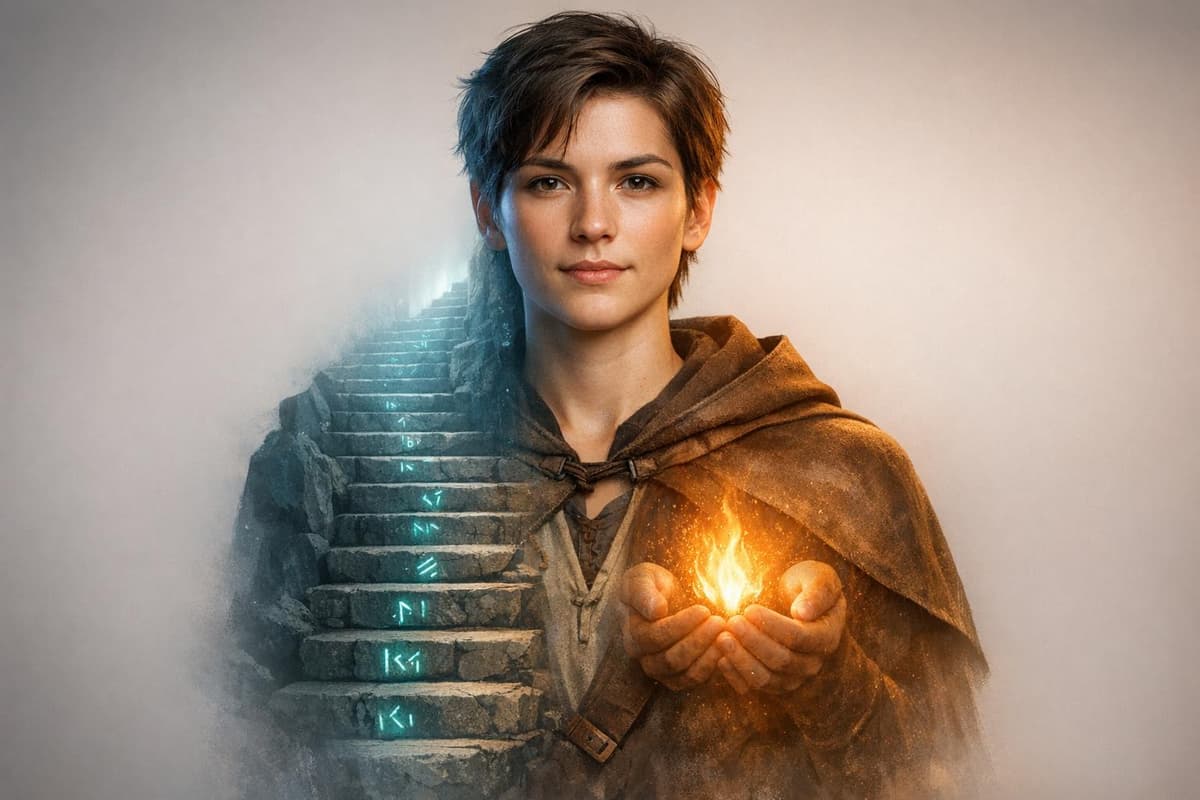
Emotional Growth vs. Power Progression in Fantasy
In fantasy stories, two key elements drive character development: power progression and emotional growth. Power progression focuses on measurable achievements - like leveling up or mastering skills - while emotional growth explores internal changes, such as overcoming fears or building trust. The best stories combine these elements, creating characters who grow both externally and internally.
- Power Progression: Tracks visible growth through levels, stats, or magic systems. Readers enjoy the satisfaction of clear milestones and the thrill of "numbers going up."
- Emotional Growth: Focuses on personal transformation, making characters relatable and their journeys meaningful. Setbacks and internal struggles deepen the narrative.
- Balance: Stories are most engaging when external achievements align with internal growth. Without this balance, characters may feel hollow or their journeys unearned.
LitRPG and progression fantasy excel at blending these aspects, offering structured growth alongside emotional depth. Readers connect with characters who evolve in both power and personality, making their victories impactful and their struggles memorable.
Power Progression in Fantasy
What Power Progression Means
Power progression refers to a character's steady rise in power through effort, training, and overcoming challenges. In progression fantasy, this isn't just a subplot - it's the core of the story. Characters often start at the bottom, with little to no power, and grow into formidable figures through a "zero to hero" journey.
In LitRPG and GameLit, this growth is often showcased through video game mechanics like character sheets, stat points (e.g., strength, dexterity, intelligence), levels, experience points (XP), and even user interface overlays. On the other hand, progression fantasy without explicit game mechanics uses "hard" magic systems with defined ranks or stages - like Copper, Iron, Jade, or Gold - and measurable improvements in areas like mana capacity or skill mastery.
"A LitRPG shall, involve a story or character, that exists in a game world or world with obviously stated game mechanics."
- Luke Chmilenko, Author
The term "progression fantasy" itself was coined on February 26, 2019, by authors Andrew Rowe and Will Wight. They used it to describe stories that incorporated anime and LitRPG tropes but without literal game interfaces, shaping both how these stories are written and what readers expect from them. By 2025, the genre had broken into the mainstream, with Will Wight's Cradle series raising millions through crowdfunding for special editions and adaptations.
This structured, quantifiable growth not only drives the story forward but also keeps readers hooked with clear milestones.
Why Readers Enjoy Power Progression
The appeal of power progression lies in its clear mechanics and the satisfaction of measurable growth. Readers are drawn to the "numbers go up" dynamic - a rewarding feedback loop where visible progress creates a sense of accomplishment, much like leveling up in an MMORPG. When a character reaches a new level or unlocks a skill, it delivers an instant sense of gratification.
"You see the number go up and for a split moment, all feels right in the world. Then you get back right to it, looking to make the next number go up, repeating the loop, chasing the next high."
- Luke Chmilenko, Author
This structure provides clear benchmarks for readers to measure a character's growth - comparing their current strength to earlier stages or upcoming challenges. The genre also appeals to fans of "system mastery", where characters strategically optimize their growth and tackle obstacles, much like crafting a character in an RPG. Unlike traditional fantasy, where growth can feel abstract, progression fantasy relies on visible, structured achievements to propel the story forward.
sbb-itb-2566684
Emotional Growth in Fantasy
What Emotional Growth Means
Emotional growth reflects a character's inner transformation. It focuses on self-awareness, resilience, and tackling internal challenges like confronting fears, learning to trust, or taking responsibility. These shifts stand apart from external power gains, which alone can leave a character feeling emotionally unchanging. Even if a character becomes stronger or more skilled, without addressing their inner struggles, their development feels incomplete.
Author Andrew Rowe highlights that tying power gains to emotional breakthroughs makes a character's progression feel deserved. When new abilities are earned through overcoming internal struggles, those moments carry a sense of authenticity and depth.
True emotional growth, however, requires effort from the character themselves. While friends, mentors, or allies can encourage change, the actual transformation must come from within. Developer Rafiul Alam explains it perfectly:
"You didn't fix him. You were part of his support system. He did the work."
This perspective acknowledges that personal growth - whether it involves mental health challenges or other hurdles - takes time, persistence, and personal agency. It’s not about instant solutions or quick fixes.
How Readers Connect with Emotional Growth
A character's internal transformation doesn’t just reshape their journey - it creates a powerful bond with readers. Emotional arcs make characters feel real and relatable. Watching a protagonist wrestle with self-doubt, heal from trauma, or learn to accept help mirrors struggles many readers face in their own lives. This relatability fosters a deeper investment than simple displays of external power.
The journey of self-discovery also brings hope and inspiration, extending its impact beyond the fantasy world. Characters who start as flawed or disadvantaged often become more endearing as readers witness their gradual growth. Importantly, emotional growth isn’t always a straight path. Setbacks, moments of regression, and periods of stagnation reflect the complexities of real-life development, ensuring characters feel dynamic rather than static.
Even small, personal victories - like standing up for oneself or handling a crisis - can resonate more deeply with readers than grand battles against overwhelming enemies. These moments highlight how emotional growth adds richness and meaning to a character's journey, making their story impactful regardless of external achievements.
Writing progression fantasy: tips from Will Wight (Cradle)
How Power Progression and Emotional Growth Work Together
The best fantasy stories don’t separate power progression and emotional growth - they blend them seamlessly. As we’ve discussed earlier, the interplay between these elements is essential for creating narratives that resonate both emotionally and mechanically. Striking the right balance between internal breakthroughs and external achievements is what makes a story truly engaging.
When Emotional Growth Drives Power Progression
Some of the most memorable moments in storytelling happen when a character’s internal growth directly fuels their external power. This connection makes new abilities feel deserved, as though the character’s personal struggles have paved the way for their newfound strength.
For instance, tying power increases to emotional breakthroughs ensures that progress feels authentic. Imagine a character overcoming their fear of failure; this internal triumph could unlock a new level of magical ability, symbolizing that their personal growth has removed a key barrier to their potential.
Moments of "power plateaus" are another powerful narrative tool. These are points where characters can’t gain more power directly, forcing them to rely on creativity and emotional development to move forward. During these phases, the story emphasizes that true strength often stems from within, reinforcing the idea that emotional growth is just as important as external power.
When Power Progression Outpaces Emotional Growth
On the flip side, when power progression outpaces emotional depth, characters can lose their relatability.
Rapid power gains without emotional substance can leave characters feeling hollow. This issue, sometimes called the "DBZ effect", refers to situations where characters grow stronger at such a fast pace that their development feels unearned. As Clark Rowenson explains:
"A lack of planning can also lead to weird situations where the growth is so rapid that it doesn't feel earned... That can coincide with numbers getting so big that they don't really mean anything anymore."
When characters become powerhouses without meaningful struggles or emotional stakes, their victories can feel empty. They might defeat increasingly powerful enemies, but if there’s no internal conflict or personal growth, readers may struggle to stay invested. What draws readers in are characters who face challenges, grapple with doubts, and evolve - not just those who amass abilities.
To avoid this imbalance, pacing is everything. Authors need to carefully align the "progression curve" with the story’s timeline. Characters shouldn’t reach god-like power without earning it through significant struggles and growth. Foreshadowing higher levels of power early on can also help. When these future abilities are hinted at, their eventual arrival feels natural, tying them closely to the character’s emotional journey.
Power Progression vs. Emotional Growth: A Comparison
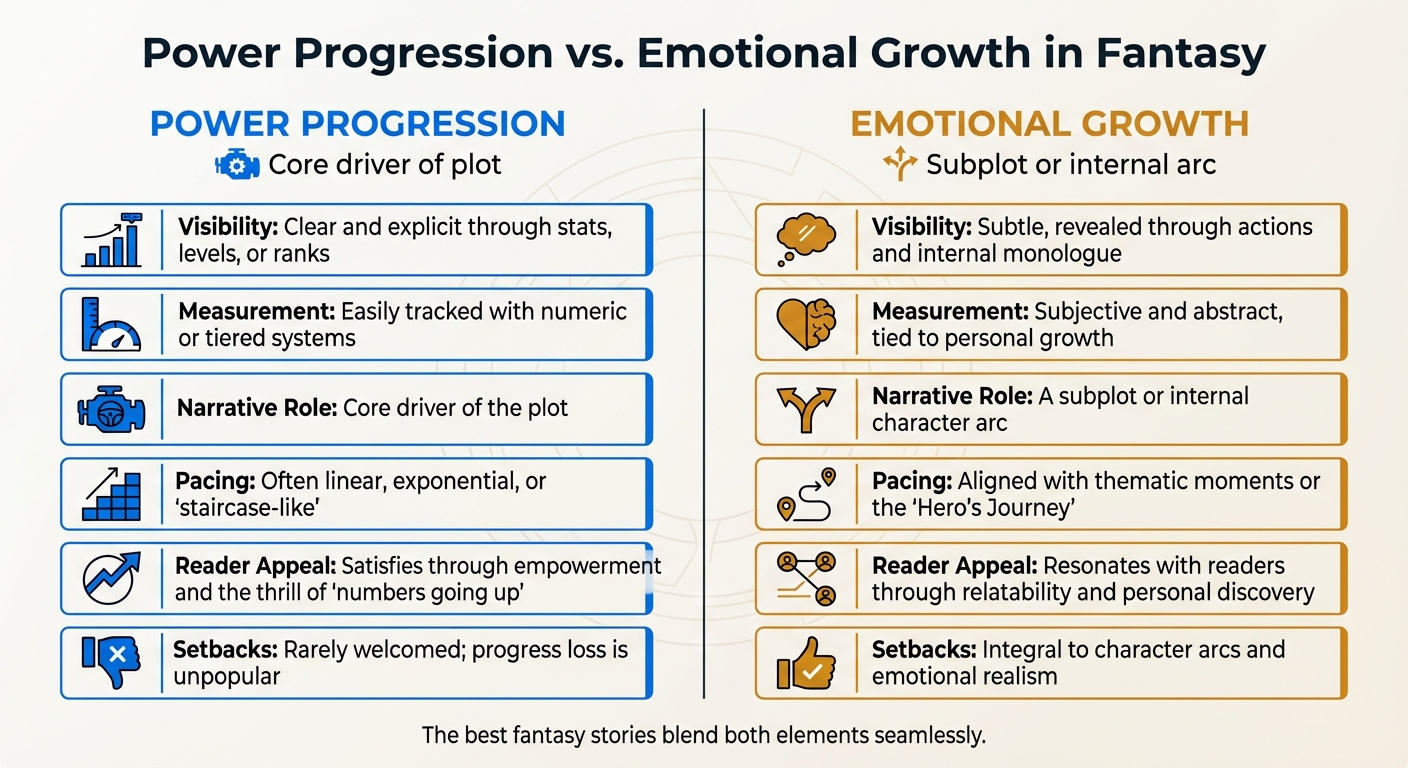
Power Progression vs Emotional Growth in Fantasy: Key Differences
Differences in Visibility and Measurement
When comparing these two elements, the distinctions in how they appear and are measured become clear. Power progression is straightforward and quantifiable, often marked by numerical milestones like levels or ranks. Emotional growth, on the other hand, is more abstract and subjective, reflected in shifts in behavior, relationships, or internal struggles.
This difference in visibility plays a significant role in storytelling. In progression fantasy, the accumulation of power is the main engine driving the plot, not just a side note. While power progression pushes the narrative forward with its clear goals, emotional growth adds depth, giving those milestones meaning and resonance for the reader.
Interestingly, setbacks in these two areas elicit very different reactions. Fantasy author Andrew Rowe notes, "Many progression fantasy readers hate any form of progress loss". Losing abilities or levels often frustrates readers who crave steady advancement. In contrast, emotional setbacks are not only accepted but expected - they’re essential for authentic character development.
Comparison Table: Power Progression vs. Emotional Growth
Here’s a side-by-side look at how these elements differ:
| Feature | Power Progression | Emotional Growth |
|---|---|---|
| Visibility | Clear and explicit through stats, levels, or ranks | Subtle, revealed through actions and internal monologue |
| Measurement | Easily tracked with numeric or tiered systems | Subjective and abstract, tied to personal growth |
| Narrative Role | Core driver of the plot | A subplot or internal character arc |
| Pacing | Often linear, exponential, or "staircase-like" | Aligned with thematic moments or the "Hero’s Journey" |
| Reader Appeal | Satisfies through empowerment and the thrill of "numbers going up" | Resonates with readers through relatability and personal discovery |
| Setbacks | Rarely welcomed; progress loss is unpopular | Integral to character arcs and emotional realism |
Recognizing these contrasts highlights how blending power progression with emotional growth can create a more engaging and layered narrative. Together, they balance the mechanical satisfaction of advancement with the emotional weight of character evolution, a hallmark of the best LitRPG books.
Conclusion
The best fantasy stories don’t make readers choose between external power and internal growth. Instead, they weave these elements together, creating a narrative that’s both captivating and meaningful. Power progression offers a clear path of advancement - complete with milestones and achievements that keep readers hooked - while emotional growth brings depth, turning victories into moments of genuine significance.
When this balance is missing, stories risk feeling incomplete. Rapid power gains without emotional depth can feel empty. On the other hand, emotional depth without visible progress might leave readers wanting the satisfaction of tangible achievements. As Clark Rowenson puts it in The Magic Engineer:
"Having a well-built system creates a solid foundation for the rest of your story. It's the framework upon which you'll build out your setting, characters, and plot".
This highlights the importance of integrating both aspects. The most engaging stories don’t treat power and emotional growth as separate paths but as interconnected forces. For example, when a character’s newfound understanding unlocks a power boost - or when gaining new abilities forces them to confront their identity - the narrative gains layers of complexity. This dynamic not only validates the protagonist’s journey but also deepens the roles of supporting characters.
Publishers have taken note of this winning formula. Sababa Books, for instance, curates LitRPG and progression fantasy novels where power systems and character development work seamlessly together. Titles like The Gilded Rebellion by Rebecca Vale and The Lifeline Protocol by Sera Kane showcase how thrilling advancement can coexist with meaningful emotional arcs.
The genre’s growing popularity proves readers crave this balance. Publishers like Aethon Books, reporting millions in collective sales by 2025, show that stories blending quantifiable progress with emotional resonance resonate deeply. Whether you’re drawn to the excitement of leveling up or the relatable struggles of personal growth, our guide to LitRPG and progression fantasy shows how the best narratives deliver both.
FAQs
How can authors tie new powers to emotional breakthroughs?
When characters gain new abilities through emotional milestones, their growth feels more authentic and engaging. For instance, a character might unlock a hidden power by confronting a deep-seated fear or achieving a moment of self-realization. This method not only makes their progression feel deserved but also strengthens the emotional connection between the audience and the character. By weaving emotional growth into the mechanics of power development, authors can craft stories where personal triumphs lead to impactful, story-driven transformations.
What causes the 'DBZ effect,' and how can writers avoid it?
The "DBZ effect" occurs when characters become so overwhelmingly powerful that the story's social dynamics and consequences start to lose their weight. Take Goku from Dragon Ball Z, for instance. His ability to destroy entire planets can make conflicts feel less meaningful or urgent. To sidestep this issue, writers can focus on balancing character abilities with believable stakes. This approach helps maintain tension and ensures emotional development stays at the heart of the narrative, keeping the story engaging and the conflicts impactful.
How do you keep power progression satisfying without losing emotional depth?
Balancing power progression with emotional depth requires connecting character growth to personal effort and training, making it feel deserved. When abilities are tied to a character's journey or specific roles, it adds an emotional layer that resonates with the audience. Techniques like logarithmic scaling help maintain tension by preventing characters from becoming too powerful too quickly. By blending well-thought-out challenges, earned development, and carefully crafted systems, power progression becomes a tool to heighten emotional stakes rather than detract from them.